Daijiworld Media Network – Beirut
Beirut, Jun 4: Israel and Lebanon have agreed to renew efforts to uphold a fragile ceasefire and establish a number of pilot security zones in southern Lebanon from which Hezbollah fighters would be excluded, according to a joint statement issued after US-mediated talks in Washington.
The agreement emerged following a fourth round of discussions hosted by the United States at the State Department. Under the proposed arrangement, the ceasefire is linked to a complete halt in Hezbollah attacks and the withdrawal of all Hezbollah operatives from areas south of the Litani River, located about 30 km north of the Israel-Lebanon border.
The plan also envisages the Lebanese Army assuming full control of the designated security zones, although details on how the zones will be implemented have not yet been disclosed.
The joint statement said the measures are intended to pave the way for a broader peace and security agreement between the two neighbouring countries. It also stressed that the future relationship between Israel and Lebanon should be determined solely by their respective governments, rejecting interference by state or non-state actors.
Hezbollah has not participated in the negotiations, which have been taking place at ambassadorial level since last month.
The statement further condemned actions by Iran that were described as destabilising to the region, including support for proxy groups and other activities viewed as threatening regional security. Another round of talks is scheduled for the week of June 22 in an effort to reach a comprehensive agreement.
Despite the diplomatic progress, hostilities continued on the ground. US President Donald Trump said discussions concerning Lebanon should remain separate from negotiations related to Iran.
However, Iranian Foreign Minister Abbas Araghchi maintained that the conflicts are interconnected and warned that any attack on Beirut could trigger a full-scale resumption of the war.
The Israeli military said it intercepted a hostile aircraft and two projectiles launched from Lebanon. In response, Hezbollah claimed responsibility for a rocket barrage targeting Israeli soldiers in northern Israel, saying the attack was in retaliation for alleged Israeli ceasefire violations.
The ceasefire, which was intended to take effect on April 17, has largely failed to hold, with both sides accusing each other of repeated breaches.
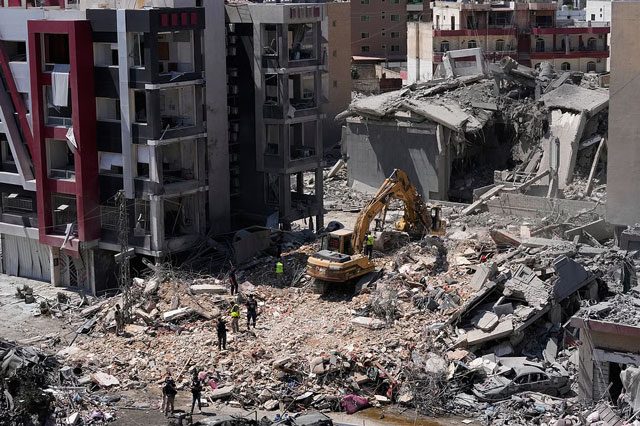
Meanwhile, Israeli strikes continued across southern Lebanon. Lebanese media reported that one attack targeted a vehicle on a highway leading out of Beirut, while several other locations in the south were also hit.
Lebanon’s Health Ministry said an Israeli strike near Tyre killed six people, including four Syrians and two Palestinians. Another attack reportedly struck an ambulance, killing two paramedics affiliated with the Risala Scouts Association, linked to the Amal movement, a Hezbollah ally.
The ministry stated that more than 130 emergency and healthcare workers have been killed since the conflict escalated.
The Lebanese Army also reported the death of one soldier in an Israeli strike and injuries to two others in a separate attack on a military vehicle. The army condemned what it described as the deliberate targeting of its personnel and positions.
Tensions remain high in the southern city of Tyre, where residents have launched petitions calling for the area to be declared an “open city” free of armed groups and seeking greater deployment of Lebanese military forces.
Israel has intensified its military operations in recent weeks, carrying out its deepest ground offensive in Lebanon in nearly two decades, raising concerns over a wider regional escalation despite ongoing diplomatic efforts.