Daijiworld Media Network - New Delhi
New Delhi, Jun 10: The Central Government on Wednesday reiterated that Punjab has sufficient stocks of urea to meet the requirements of the ongoing Kharif 2026 season, dismissing concerns over any potential shortage and highlighting sustained efforts to maintain a robust fertilizer supply chain across the state.
According to the Department of Fertilizers (DoF), Punjab’s total urea requirement for the Kharif season has been estimated at 14.50 lakh metric tonnes (LMT). Against the pro-rata requirement of 9.0 LMT up to June 9, the Centre has ensured the availability of 10.71 LMT, significantly exceeding projected demand.
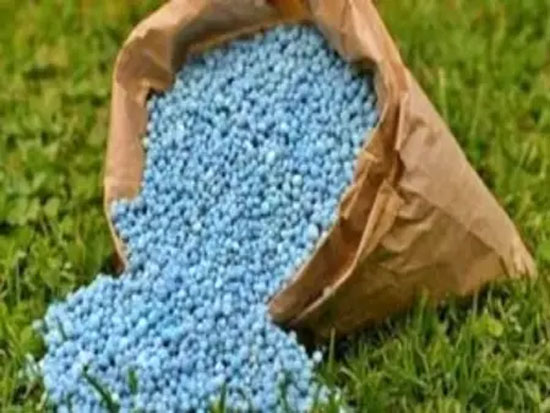
Official data showed that actual urea sales in Punjab so far stood at 6.25 LMT, leaving a substantial closing stock of 4.46 LMT available for immediate use by farmers. In addition, another 39,167 metric tonnes (0.39 LMT) of urea is currently being transported to the state, further strengthening inventory levels.
The Department noted that paddy transplantation, one of the most fertilizer-intensive agricultural activities during the Kharif season, is yet to begin in full swing across Punjab. Based on ground reports received from state authorities, the existing stock position is considered more than adequate to meet current and upcoming demand.
Amritsar district, one of Punjab’s major agricultural regions, has also reported a comfortable supply situation. The district has received 64,720 metric tonnes of urea during the ongoing season, with nearly 32,956 metric tonnes still available in stock.
The Centre attributed the healthy inventory position to advance planning and pre-positioning measures undertaken before the start of the Kharif season. Between January and March 2026, Punjab’s estimated requirement was 3.50 LMT, but the Department supplied 6.08 LMT—an additional 2.58 LMT—to build reserves ahead of peak consumption months.
Urea consumption in Punjab has also witnessed a noticeable increase this year. Between March 1 and June 9, 2026, total sales reached 7.86 LMT, compared to 7.10 LMT during the corresponding period last year, reflecting an increase of 0.76 LMT.
The Department further pointed out that a similar strategy had been adopted during the Rabi 2025-26 season. Against a projected requirement of 15 LMT, total availability was maintained at 19.43 LMT, while actual sales touched 15.45 LMT, surpassing initial estimates by 45,000 metric tonnes.
Officials said that while the higher-than-expected consumption may have reduced state-level buffer stocks, the Centre has continuously replenished supplies to ensure uninterrupted availability and stability in the distribution pipeline.
The statement also underlined the challenges posed by the current global geopolitical environment, which has impacted fertilizer markets worldwide. Ongoing tensions involving the United States, Israel and Iran have affected global fertilizer availability and disrupted key maritime trade routes, creating uncertainties in international supply chains.
Despite these challenges, the Government of India has taken several proactive measures to safeguard domestic agricultural requirements. The Department of Fertilizers activated the Empowered Pool Management Committee (EPMC) mechanism to facilitate spot procurement of natural gas, enabling fertilizer manufacturers to maximise domestic production. Simultaneously, planned fertilizer imports have been strategically scheduled throughout the year to maintain adequate reserves.
While assuring uninterrupted bulk supply, the Centre emphasized that state governments are responsible for ensuring smooth and equitable retail-level distribution. It urged states to strengthen inter-district and intra-district logistics to prevent localized shortages and supply bottlenecks.
To curb misuse of subsidized fertilizer, the Centre has also conducted a series of high-level reviews with state governments. During a recent video conference jointly chaired by the Secretaries of the Departments of Agriculture and Fertilizers, state officials were directed to intensify action against hoarding, black marketing, and diversion of agricultural urea for industrial purposes.
Fertilizer manufacturers and importers have also been instructed to remain responsive to emerging requirements and address any supply-related issues promptly.
The government said it continues to closely monitor the fertilizer situation across the country in coordination with state authorities, reaffirming its commitment to supporting farmers and ensuring a successful Kharif 2026 cropping season.