Daijiworld Media Network – New Delhi
New Delhi, Jun 16: The Centre has initiated a detailed study of demographic changes in several border districts and major urban centres, with a special focus on what it describes as “unnatural demographic changes” and their possible implications for national security, governance and social stability.
The exercise follows Prime Minister Narendra Modi's remarks from the Red Fort on August 15, 2025, when he expressed concern over unusual demographic shifts in certain regions of the country.
To examine the issue, the Ministry of Home Affairs (MHA) constituted a high-level committee on May 26, 2026, under the chairmanship of Justice Prakash Prabhakar Naolekar.
According to sources, the committee has been tasked with studying demographic changes in districts along the India-Pakistan and India-Bangladesh borders, as well as in several metropolitan and industrial centres. The panel is expected to submit its report to the Home Ministry within a year.
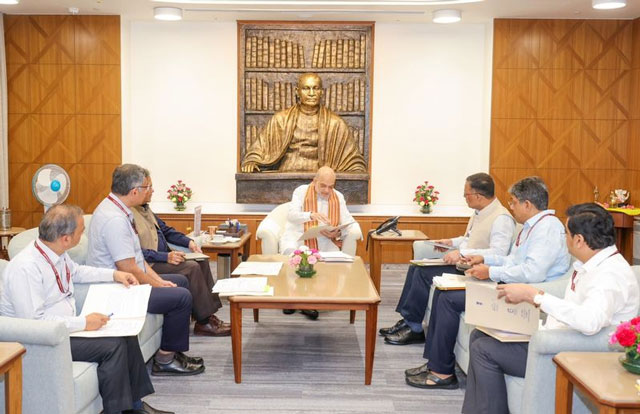
Union Home Minister Amit Shah recently chaired a review meeting with senior officials to assess the committee's progress and discuss logistical and administrative support required for its functioning.
Officials said the committee has already held its first meeting and finalised its agenda. Members are expected to undertake field visits to various regions before preparing a comprehensive report.
The government defines demographic change as shifts in the population structure of a region resulting from factors such as birth rates, mortality, migration and economic activity. However, the committee's primary focus will be on changes that may arise from illegal infiltration, unregulated migration or other unusual factors that significantly alter population patterns.
Officials believe such changes could affect governance, resource allocation, social and cultural structures, and internal security.
Border districts along the India-Bangladesh and India-Pakistan frontiers are expected to receive special attention. Over the years, concerns have periodically been raised regarding illegal migration and changing population trends in parts of Assam, West Bengal and other northeastern states.
Sources said the committee will interact with local administrations, security agencies, elected representatives and civil society organisations. It is also expected to analyse Census figures, electoral rolls, migration records and other government databases.
The committee's mandate extends beyond border areas and includes major cities such as Delhi, Mumbai, Bengaluru, Hyderabad, Noida, Gurugram, Ahmedabad and Pune, which attract large numbers of migrants due to employment and economic opportunities.
Government sources said the panel may examine both legal and illegal migration trends in these urban centres and study their impact on infrastructure, employment, public services and law and order.
The Home Ministry is also viewing the issue from a national security perspective. Security agencies have previously raised concerns regarding illegal infiltration, forged identity documents, unauthorised inclusion in voter rolls and organised settlement networks in sensitive regions.
The committee is expected to focus on population growth trends in border districts, possible instances of illegal migration, demographic pressures in metropolitan regions, impacts on local resources and employment, social and cultural implications, and effects on law and order and internal security.
It will also seek inputs from state governments, central ministries, security agencies and expert institutions before making policy recommendations.
Officials indicated that the committee's findings could influence future measures related to border management, verification of identity documents, monitoring of migration trends and administrative planning in sensitive areas.
The Centre believes a comprehensive, evidence-based assessment will help policymakers better understand demographic shifts and formulate long-term strategies to address related governance and security concerns.