Daijiworld Media Network – Lucknow
Lucknow, Jun 18: The Uttar Pradesh government is set to launch a major “poison-free food” campaign aimed at supplying naturally produced farm goods directly to consumers through a structured farm-to-consumer model.
The initiative, prepared by the UP Go-Seva Aayog on the directions of Chief Minister Yogi Adityanath, focuses on delivering chemical-free and organically produced food items directly from farms to households across the state.
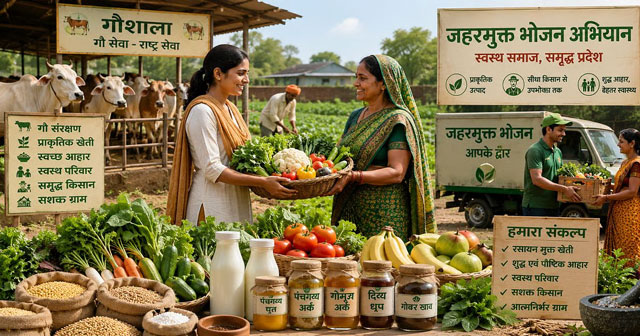
As part of the plan, gaushalas (cow shelters) will be developed into key centres not only for cow protection but also for the production, collection and distribution of organic food products.
In the first phase, families living within a five-kilometre radius of selected gaushalas will be connected to the programme. These households will receive grains, fresh vegetables, fruits and Panchgavya-based products produced through natural farming methods.
Officials said the initiative follows a “farm to consumer” model designed to ensure fair pricing for farmers while providing consumers with access to chemical-free food products.
UP Go-Seva Aayog chairman Shyam Bihari Gupta said the campaign is aimed at improving public health and reducing exposure to harmful chemicals in food.
He said Chief Minister Yogi Adityanath’s vision is to promote “poison-free food” and protect citizens from lifestyle diseases by encouraging natural farming practices.
According to Gupta, gaushalas will be transformed into rural supply hubs supporting the distribution of organic produce, including vegetables, fruits, grains, milk, Panchgavya ghee and medicinal products.
He added that the initiative will also generate employment opportunities for rural youth, who will be involved in processing, packaging and marketing activities linked to the supply chain.
Officials said local farmers growing chemical-free produce will benefit from assured markets through the gaushala network, eliminating the need to search for buyers independently.
The government expects the programme to strengthen rural economies while promoting sustainable agriculture and healthier food consumption across the state.