Daijiworld Media Network - Mumbai
Mumbai, Jun 29: India's external debt rose to $762.8 billion as of March 31, 2026, registering an increase of $26.3 billion over the previous year, according to data released by the Reserve Bank of India (RBI) on Monday.
The RBI said the country's external debt-to-GDP ratio increased to 20.8 per cent at the end of FY26, compared with 19.8 per cent a year earlier, reflecting a modest rise in overseas liabilities relative to the size of the economy.
Despite the increase in overall debt, India's debt servicing obligations improved during the year. The debt service ratio—which measures principal repayments and interest payments as a proportion of current receipts—declined to 5.8 per cent from 6.6 per cent at the end of March 2025, indicating a lower repayment burden.
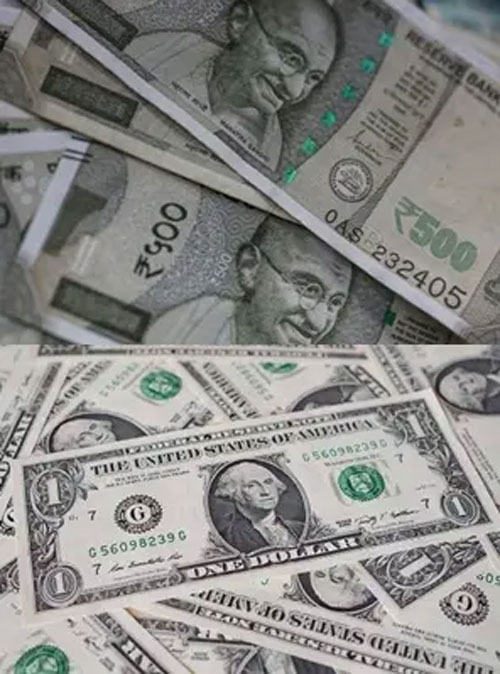
According to the central bank, fluctuations in global currency markets significantly influenced the debt figures. The appreciation of the US dollar against the Indian rupee and several other major currencies resulted in a valuation effect of $24.6 billion. Excluding this exchange rate impact, India's external debt would have risen by $51 billion during the year instead of the reported $26.3 billion.
The RBI noted that while the Centre's outstanding external debt declined over the year, borrowings by non-government entities increased, contributing to the overall rise in external liabilities.
Long-term external debt, comprising borrowings with an original maturity of more than one year, stood at $613.5 billion at the end of March 2026, an increase of $11.6 billion compared to the previous year.
Meanwhile, the share of short-term debt in total external debt rose to 19.6 per cent, up from 18.3 per cent a year earlier. The ratio of short-term debt to India's foreign exchange reserves also increased to 21.6 per cent, compared with 20.1 per cent at the end of March 2025.
The RBI further reported that short-term debt measured on a residual maturity basis—which includes both short-term borrowings and long-term debt maturing within the next 12 months—accounted for 42.9 per cent of total external debt. This was higher than 41.2 per cent recorded a year ago. As a proportion of foreign exchange reserves, such debt increased to 47.3 per cent, compared with 45.4 per cent at the end of FY25.
The US dollar continued to dominate India's external debt profile, accounting for 55.5 per cent of the total outstanding liabilities. Debt denominated in the Indian rupee represented 29.4 per cent, followed by the Japanese yen at 6.4 per cent, Special Drawing Rights (SDRs) at 4.3 per cent, and the euro at 3.7 per cent.
Sector-wise, non-financial corporations remained the largest borrowers, contributing 36.4 per cent of India's total external debt. Deposit-taking corporations, excluding the central bank, accounted for 26.5 per cent, while the general government represented 22 per cent. Other financial corporations contributed 10.2 per cent of the total external debt.
Among borrowing instruments, loans continued to constitute the largest component, making up 34.7 per cent of total external debt. They were followed by currency and deposits at 22.3 per cent, trade credit and advances at 19 per cent, and debt securities at 16.1 per cent.
The latest RBI data indicates that while India's external borrowings expanded during FY26, the country's debt servicing burden eased and the overall external debt profile remained supported by a significant share of long-term liabilities.