Daijiworld Media Network - New Delhi
New Delhi, Jul 1: The Congress on Wednesday criticised the Centre over the wage rates notified under the newly introduced Viksit Bharat-Guarantee for Rozgar and Ajeevika Mission-Gramin (VB-G RAM G) Act, 2025, alleging that workers were being paid “unjustifiably low” wages.
The party said the daily wage under the scheme remained around Rs 300 despite recommendations by the Parliamentary Standing Committee on Rural Development for higher payments.
Congress leader Jairam Ramesh said the Expert Committee headed by Dr Anoop Satpathy, constituted by the Narendra Modi government, had recommended a national minimum wage floor of Rs 375 per day in 2019.
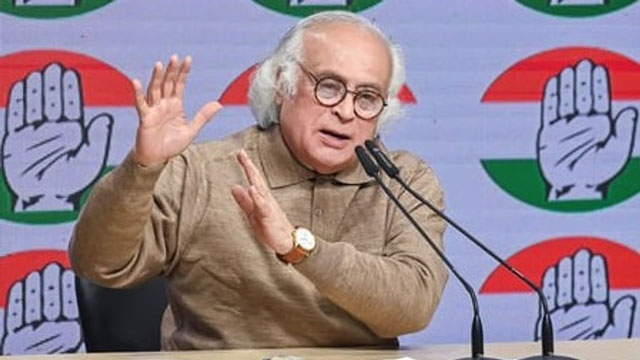
“The wages due to workers are also unjustifiably low – largely at Rs 300 per day. In the 2024 Lok Sabha campaign, Congress had guaranteed a Rs 400 national daily minimum wage to all workers, including for MGNREGA,” Ramesh said in a post on X.
He said the notification came at a time when protests over minimum wages were being witnessed in industrial areas and rural wage stagnation was being recognised as a challenge to economic growth.
Ramesh alleged that the new wage structure was a setback for workers and against sound economic policy. He also pointed out that the Parliamentary Standing Committee on Rural Development had repeatedly recommended higher wages for MGNREGA workers.
Addressing a press conference in New Delhi, senior Congress leader and Chairman of the Parliamentary Standing Committee on Rural Development and Panchayati Raj, Saptagiri Ulaka, criticised the new framework, claiming it weakens the statutory guarantee of employment available to rural households.
Ulaka alleged that the new law changes the employment model by making work availability dependent on pre-approved budget allocations rather than actual demand from workers.
He said that under MGNREGA, registered rural households could demand work and the administration was legally required to provide employment within a specified period or pay unemployment allowance.
According to Ulaka, VB-G RAM G shifts the system from a demand-based model to a supply-based approach, where employment depends on budget allocations, approved labour budgets, central ceilings, state contributions and administrative capacity.
He also criticised the proposed funding arrangement under the new scheme, stating that the Centre’s share has been reduced to 60 per cent while states will now have to contribute 40 per cent of the programme expenditure.