Daijiworld Media Network – New Delhi
New Delhi, Jul 10: Union Road Transport and Highways Minister Nitin Gadkari has said the use of E20 fuel, which contains 20 per cent ethanol and 80 per cent petrol, may cause a slight reduction in vehicle mileage but does not pose any risk of engine damage.
Speaking on the ongoing debate over higher ethanol-blended fuel, Gadkari said the lower calorific value of ethanol compared to petrol could lead to a marginal drop in fuel efficiency. However, he maintained that the impact is minimal under normal driving conditions.
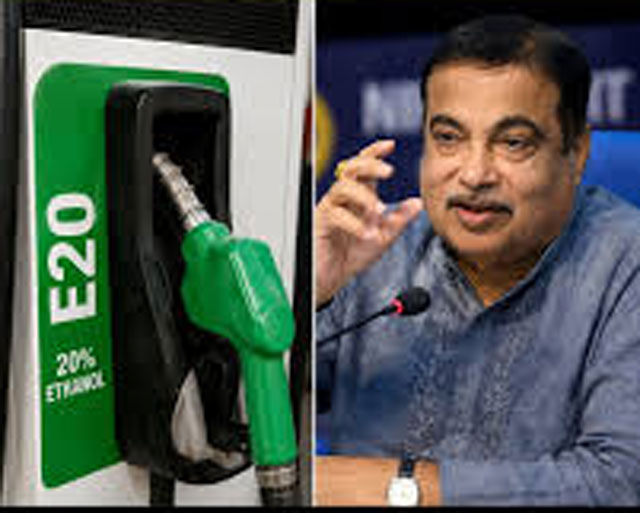
He dismissed claims circulating on social media that E20 fuel damages vehicles, calling them part of a "false narrative." The minister said the nationwide rollout of E20 fuel was undertaken only after extensive testing by the Automotive Research Association of India (ARAI) and vehicle manufacturers.
"Show me a single car that has suffered damage because of E20 fuel. The claims being circulated on social media are exaggerated," Gadkari said.
He explained that fuel efficiency also depends on traffic conditions and driving patterns. In congested cities such as Delhi and Mumbai, where vehicles frequently stop and accelerate, mileage is naturally affected regardless of fuel type. Vehicles equipped with flex-fuel engines, however, do not face mileage-related issues, he added.
Gadkari said older vehicles may require replacement of certain components, such as washers, during routine servicing to ensure compatibility with ethanol-blended fuel. Automobile manufacturers have been instructed to replace these parts free of cost wherever necessary.
He also said investigations into reported cases of engine damage revealed that fuel adulteration, rather than E20 fuel itself, was responsible for the problems.
Highlighting the government's push towards alternative fuels, Gadkari said several automobile manufacturers, including Tata Motors, Mahindra, Hyundai, Toyota Kirloskar and Maruti Suzuki, are preparing to introduce flex-fuel vehicles in India.
The minister noted that countries such as Brazil have successfully used higher ethanol blends for decades and stressed that expanding the use of ethanol would help reduce India's dependence on imported fossil fuels while lowering fuel costs and pollution.
Gadkari also advocated greater use of methanol and iso-butanol as alternative fuels for commercial vehicles, marine transport, agricultural machinery and generators, saying they could play a key role in reducing diesel consumption and promoting cleaner, indigenous energy sources.