Daijiworld Media Network - New Delhi
New Delhi, Jul 24: India on Friday firmly dismissed allegations in sections of the Pakistani media that it had deliberately caused flooding across the border, describing the claims as "baseless, factually incorrect and technically untenable."
Addressing a weekly media briefing, Ministry of External Affairs (MEA) spokesperson Randhir Jaiswal said the recent rise in the Chenab River's water level was solely due to intense monsoon rainfall over Jammu and adjoining catchment areas between July 20 and July 23.
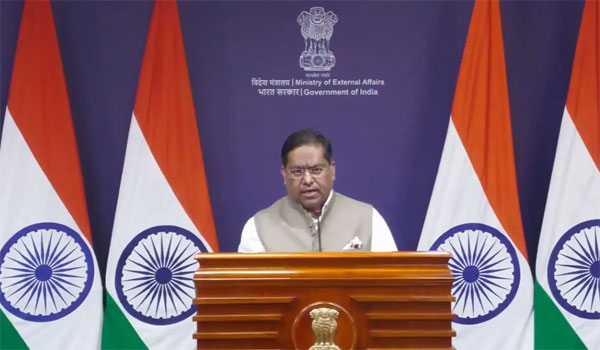
“We have seen reports in the Pakistani media alleging that India deliberately caused flooding in Pakistan. These allegations are completely baseless and contrary to the facts. The recent increase in the Chenab River's flow is a direct consequence of heavy monsoon rainfall over Jammu and the adjoining catchment areas,” Jaiswal said.
He pointed out that Pakistan's own Flood Forecasting Division had issued a flood advisory on July 22, attributing the increased river flow to heavy rainfall in the upper catchment areas.
According to Jaiswal, the advisory, issued at 5.18 p.m. (local time), stated that high water levels at Marala were expected to continue temporarily before gradually receding as rainfall subsided.
“The rise in river flows is a natural hydrological response to heavy monsoon rains and not the result of any deliberate action by India. Attempts to portray a weather-driven flood event as upstream intervention are factually incorrect, technically untenable and contradicted by Pakistan's own official flood advisories,” he said.
Responding to allegations that India had failed to issue flood warnings, the MEA spokesperson said the river discharge during the period did not reach levels that required any special flood alerts.
He added that the observed flow remained consistent with normal monsoon conditions and was in line with assessments made by Pakistan's own flood forecasting authorities.
“Any suggestion that India deliberately withheld flood-related information has no factual basis. Nevertheless, as in previous years, India will continue to share high-flood data with Pakistan on humanitarian grounds through diplomatic channels whenever the situation warrants,” Jaiswal said.
During the briefing, the MEA also reiterated India's position on the Indus Waters Treaty (IWT), maintaining that the agreement would remain in abeyance until Pakistan takes credible and irreversible steps to end its support for cross-border terrorism.
“Our position remains unchanged and very clear. The Indus Waters Treaty will remain in abeyance until Pakistan irrevocably and credibly abjures its support for cross-border terrorism,” Jaiswal said.
The Indus Waters Treaty, signed on September 19, 1960, governs the sharing of waters from the Indus river system between India and Pakistan.
India suspended the treaty following last year's Pahalgam terror attack, stating that it had exercised its sovereign rights under international law and that the agreement would remain in abeyance until Pakistan demonstrates a credible and irreversible commitment to ending cross-border terrorism.