Daijiworld Media Network - Texas
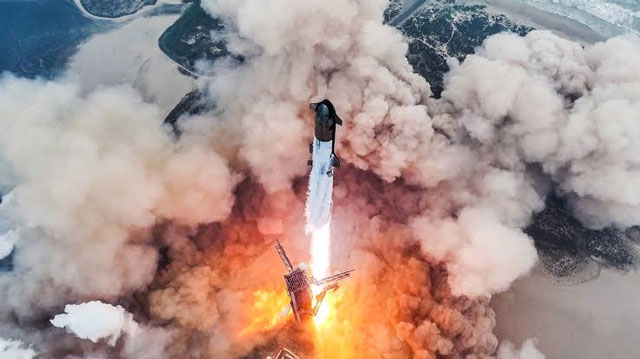
Texas, Jul 25: SpaceX successfully launched its Starship rocket on its 13th test flight from Starbase in southern Texas on Friday, marking another major milestone in the development of the spacecraft that NASA plans to use for future lunar missions under the Artemis programme.
Standing 407 feet (124 metres) tall, Starship lifted off after SpaceX replaced six of the 33 engines on the first-stage booster following a last-minute launch abort last week caused by engine ignition failures. The previous Starship test flight in May had also encountered engine problems that prevented the booster from making a controlled return.
The latest mission was the second flight this year of the upgraded V3 version of Starship. As with the previous test, neither the booster nor the spacecraft was intended for recovery. The booster was scheduled to splash down in the Gulf of Mexico, while the spacecraft was expected to re-enter over the Indian Ocean after travelling more than 16,000 kilometres during its hour-long flight.
During the mission, Starship deployed a batch of Starlink satellites before re-entry. The satellites were expected to spend about 20 minutes operating independently, extending their solar arrays and antennas and attempting laser communication with existing Starlink satellites already in orbit.
SpaceX currently operates a constellation of more than 10,000 Starlink satellites, making it the world's largest satellite internet network.
Six of the newly deployed Starlink satellites were equipped with cameras to capture images of Starship's heat shield during re-entry. The spacecraft's heat shield also carried sensors to measure the extreme pressures experienced during launch. As part of an experiment, several thermal protection tiles were painted white to simulate missing tiles and evaluate the shield's durability.
The company aims to ensure that Starship's heat shield can withstand the intense heat of atmospheric re-entry before attempting to return the spacecraft to the Starbase launch site. SpaceX has already demonstrated the ability to catch returning Super Heavy boosters using giant mechanical arms at the launch pad and plans to eventually recover the Starship spacecraft in the same way, making the system fully reusable.
NASA is relying on Starship for its Artemis III mission, which will see three American astronauts and one Italian astronaut attempt a crewed lunar landing. The space agency expects Starship to complete testing and achieve orbital capability soon so astronauts can begin practising docking operations next year.
Beyond NASA's lunar programme, SpaceX founder Elon Musk envisions Starship as the vehicle that will enable human settlement on Mars. Musk has also outlined plans for future commercial missions carrying tourists to both the Moon and Mars.
The latest launch had been delayed twice—first after the aborted attempt on Jul. 16 and later due to thick cloud cover caused by Tropical Storm Bertha.