Daijiworld Media Network - New Delhi
New Delhi, Aug 6: The Lok Sabha on Thursday passed the Taxation and Other Laws (Amendment) Bill, 2026, paving the way for the Central government to allow banks and payment service providers to levy charges on Unified Payments Interface (UPI) transactions and other notified digital payment modes in the future.
The Bill, passed by a voice vote without discussion amid disruptions in the House, amends the Payment and Settlement Systems Act, 2007, the Income Tax Act, 2025, and the Finance Act, 2026. Finance Minister Nirmala Sitharaman moved the legislation after the House resumed proceedings at 2 pm following an earlier adjournment.
The amendment does not immediately impose charges on UPI transactions. Instead, it removes the legal restriction that prevented banks and payment service providers from collecting Merchant Discount Rate (MDR) on specified digital payment modes and authorises the Centre to notify such charges in the future.
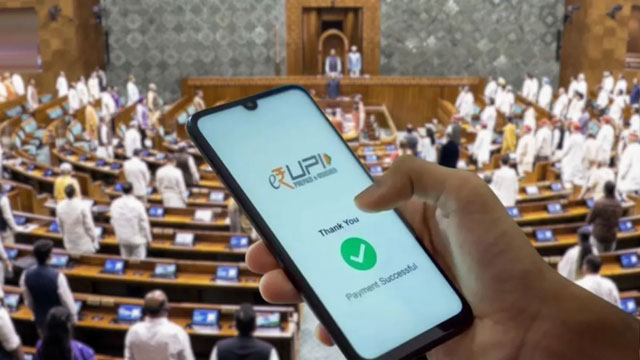
Under the amended law, Section 10A of the Payment and Settlement Systems Act, 2007, has been revised to empower the Central government to specify, through notification, one or more electronic payment modes that may attract charges. Until such a notification is issued, UPI transactions will continue under the existing framework.
The amendment replaces the earlier provision linked to Section 269SU of the Income Tax Act, 1961, which prohibited banks and payment service providers from levying direct or indirect charges on notified electronic payment modes.
Section 269SU requires businesses with an annual turnover exceeding Rs 50 crore to offer customers prescribed digital payment options, including BHIM-UPI QR codes and RuPay debit cards. Owing to this provision, banks and payment service providers were not permitted to levy MDR on these payment modes.
The government said the amendment is intended to create a sustainable revenue model for banks, payment service providers and companies responsible for developing and maintaining India's digital payments infrastructure. Officials believe that allowing a modest charge on certain digital payment services could help support long-term investment while ensuring continued growth of the country's digital payments ecosystem.
Merchant Discount Rate (MDR) is a fee paid by merchants to banks or payment service providers for processing digital payment transactions. While MDR is currently applicable to credit card payments and several other payment instruments, UPI transactions have remained free, contributing significantly to their widespread adoption. Certain Real-Time Gross Settlement (RTGS) and National Electronic Funds Transfer (NEFT) transactions already attract service charges in specific cases.
A day before the Bill was passed, Reserve Bank of India Governor Sanjay Malhotra said it was premature to speculate on the introduction of MDR for digital payments. He said maintaining and strengthening public payment infrastructure requires sustained investment, with the cost ultimately needing to be borne either through taxpayer-funded government expenditure or under a "user pays" model through MDR.
Malhotra said the government's amendment provides the legal framework for future policy decisions and stressed that continued investment in digital payment infrastructure remains essential. He added that the appropriate funding mechanism, whether through MDR or another model, would become clearer as the situation evolves.
The question of introducing MDR on UPI transactions has remained a subject of debate for several years. While banks and payment industry stakeholders have argued for a sustainable revenue source to support payment infrastructure, successive governments have continued to promote zero-cost digital payments to boost financial inclusion and reduce dependence on cash.
Industry experts have suggested that if MDR is introduced in the future, it may be limited to high-value merchant transactions, while person-to-person (P2P) UPI transfers are expected to remain free. However, the government has not issued any notification regarding such charges so far.