Mounesh Vishwakarma
Daijiworld Media Network – Bantwal
Bantwal, Aug 9: The food culture of Tulu Nadu is deeply woven into the rhythms of nature, with traditional food practices evolving over different periods to meet the needs of the human body and way of life, said Prof B Shivaram Shetty, retired professor of Mangalore University’s S V P Kannada Study Centre.
He was delivering the keynote address at the seminar ‘The Disappearing Food Culture of Tulu Nadu’, held on Sunday at the Rani Abbakka Tulu Study Centre and Tulu Life Museum in Sanchayagiri, BC Road, Bantwal taluk, in association with the India Foundation for the Arts.
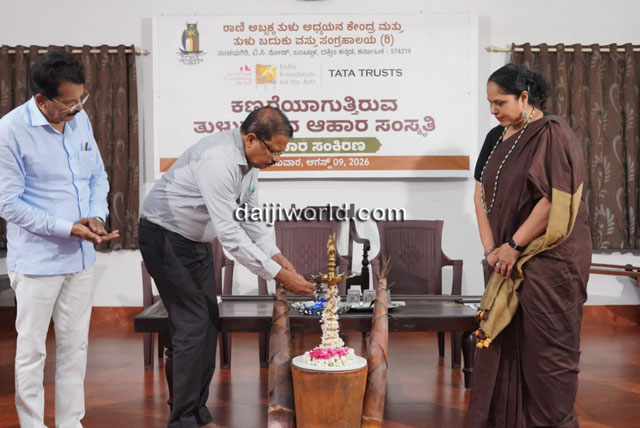
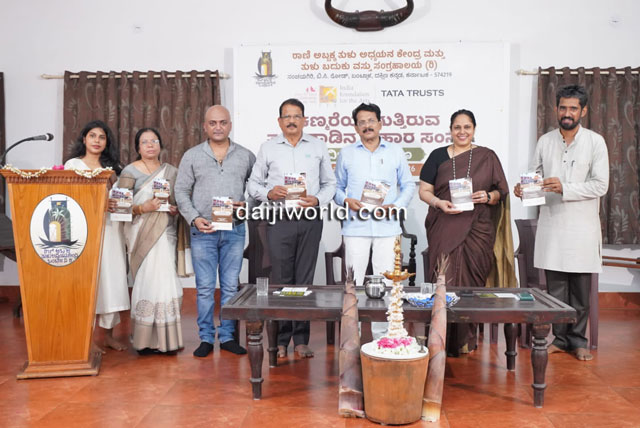
Explaining the close links between food traditions and the wider social fabric, Shetty highlighted the relationship between nature, health, family and social systems underlying Tulu Nadu’s food practices.
Speaking about the ritual of preparing and consuming a decoction from the bark of the tree on Aati Amavasya, he explained the restrictions and practices associated with it, noting that nature also plays a role in transforming the tree bark into medicine. He said food traditions were similarly inseparable from family life.
“Family preservation, kinship and caste structures within society have also influenced food culture,” he said, adding that the seminar, bringing together these diverse dimensions, had created a meaningful platform to examine and reflect on Tulu Nadu’s food traditions.
Inaugurating the seminar, Menaka Rodrigues, executive director of the India Foundation for the Arts, said such discussions were valuable in understanding the diversity of food culture and the ways of life that have shaped it.
Dr Tukaram Poojary, founder of the Rani Abbakka Tulu Study Centre, recalled the importance attached to food practices in the Tulu way of life and society in earlier times. He stressed the need to revisit the region’s traditional food culture in the present context.
Three sessions explore Tulu food heritage
The first session, ‘Tulu Society and Food Culture’, featured researcher Rajashree T Rai Perla and traditional food expert Sudarshan Bhat Bedradi.
The second session, ‘The Significance of Utensils in Tulu Culture’, saw antique collector and visual artist Purushotham Adve present his views on the subject.
The third session examined ‘Food and Health in the Changing Modern Era’, with Dr Supreeth J Lobo addressing the topic.
Dr Ashalatha Suvarna of the Rani Abbakka Tulu Study Centre was present at the programme. Programme coordinator Aravind Kudla compered the event, while Sindhoor TP of the centre delivered the vote of thanks.
An information handbook on the study centre was also released during the programme.