Daijiworld Media Network - New Delhi
New Delhi, Nov 17: White hair growth associated with alopecia areata (AA) can occur independently of the hair follicle growth cycle, with ageing, autoimmune conditions and changes in hair pigmentation identified as key associated factors, according to a large retrospective study.
The findings provide fresh insights into the mechanisms behind white hair development in people with alopecia areata, an autoimmune condition that causes hair loss. Researchers identified three possible pathways contributing to the development of white hair in affected patients.
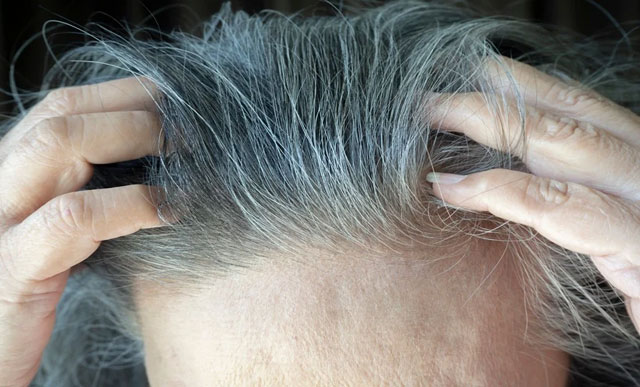
The study examined clinical characteristics, dermatoscopic findings and histopathological features to understand the presentation and underlying mechanisms of alopecia areata-associated white hair growth (AA-WH). Researchers also investigated its association with age, other medical conditions and inflammatory markers.
AA-WH was identified in 16 per cent of the 5,155 patients examined, accounting for 826 cases. Its prevalence increased with age and the presence of grey hair, reaching 44.4 per cent among patients aged 55 years and above.
Other associated risk factors included older age at the onset of alopecia areata, higher Severity of Alopecia Tool (SALT) scores, coexisting vitiligo, abnormal thyroid function or thyroid autoantibodies, and positive antinuclear antibody (ANA) tests.
The clinical presentations included mosaic or uniformly white hair, with localised, diffuse and hairline distribution patterns. Mosaic presentations were predominant across different alopecia areata subtypes, except in patients with alopecia totalis and alopecia universalis.
Researchers proposed three possible mechanisms responsible for white hair growth in alopecia areata. These included the growth of white vellus hairs, transformation of pigmented terminal hairs and persistence of pre-existing grey hair. Depigmentation of previously pigmented terminal hairs was also observed.
Compared with patients without AA-WH, those affected more frequently showed hair root depigmentation, trichomalacia, follicular pigment casts, regrowth of white vellus hair and weakly pigmented hair bulbs.
The association with inflammatory and immune markers also varied according to the clinical presentation.
Diffuse uniform white hair growth was associated with elevated total immunoglobulin E (IgE) and dust-mite-specific IgE levels among males aged 14 years and below.
Among females aged 36 years and above, the same presentation was associated with abnormal thyroid function, thyroid autoantibodies and positive ANA tests.
White hair growth along the hairline or at the borders of affected lesions was associated with elevated total IgE and interleukin-4 levels.
The study also examined treatment outcomes. Among patients for whom follow-up data were available, 81.7 per cent (353 out of 432) experienced recovery following treatment.
The findings suggest that both depigmentation and repigmentation can occur without evidence of changes in the hair follicle growth cycle, challenging the assumption that hair pigmentation changes necessarily depend on the hair growth cycle.
Researchers concluded that alopecia areata-associated white hair growth was linked to ageing, pre-existing grey hair and autoimmune factors across different age groups, while allergic features appeared particularly relevant among younger patients.
Identifying the distinct mechanisms involved in hair pigmentation changes could help improve understanding of the condition and its clinical presentation.