Daijiworld Media Network – Bengaluru
Bengaluru, Aug 13: The Karnataka Food Safety and Drug Administration has issued a 12-point advisory to hotels, restaurants, catering services and other food business operators, warning of legal action for violations, amid intensified inspections across the state and a major enforcement drive at star hotels in Bengaluru.
The Commissioner of Food Safety and Drug Administration, Karnataka, directed food establishments to strictly follow food safety and hygiene norms under the Food Safety and Standards Act, 2011, and FSSAI rules, news agency ANI reported.
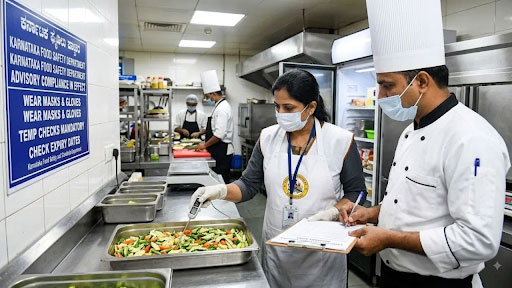
The circular, dated August 11, lays down guidelines covering food handlers, premises, storage, transportation, water, waste management and prevention of contamination. Food business operators have been directed to keep their premises clean, hygienic and properly maintained, with food-contact surfaces, utensils and equipment cleaned regularly.
Food handlers must wear clean uniforms, headgear and gloves and maintain personal hygiene. They must also undergo health check-ups, while sick workers should not handle food. Frequent handwashing has been emphasised, and establishments must appoint a designated Food Safety Supervisor with FoSTaC certification.
The advisory directed operators to use only good-quality raw materials and store ingredients in clean and hygienic conditions. Expired and substandard ingredients must be discarded, while food items should be properly labelled and stored.
Food must be prepared hygienically, with raw and cooked food kept separately to prevent cross-contamination. Hot food should be maintained above 60 degrees Celsius, while cold and frozen food should be kept below 4 degrees Celsius and -18 degrees Celsius, respectively. Separate utensils and containers must be used for vegetarian and non-vegetarian food.
The department also directed food transportation vehicles to be clean and covered, with separate transportation advised for raw and cooked food. Temperature control must be maintained during transit.
Only potable water approved for drinking should be used for cooking and cleaning. Water tanks must be cleaned and tested regularly, while clean toilets with proper handwashing facilities should be provided for staff and customers.
Food establishments must remain free of pests and undertake regular pest control. Waste bins should be covered and cleared regularly, with open dumping prohibited and waste disposed of only through authorised agencies.
Operators were also instructed to prevent cross-contamination between raw and cooked food and immediately discard food showing fungal growth. Allergen details must be displayed, while nutritional information should be provided wherever applicable.
The advisory further stated that used cooking oil must not be reused and should be disposed of only through authorised agencies.
The advisory comes against the backdrop of a major food safety enforcement drive in Bengaluru, where the Karnataka FDA conducted surprise inspections at 26 three-star and five-star hotels. Thirty Food Safety Officer teams took part in the drive, carried out under the guidance of Health Minister UT Khader, to verify compliance with food safety and licensing regulations.
Officials collected 35 food samples, including tea powder, chicken, mutton, fish, edible oil, chilli powder, turmeric powder, tomato sauce, lemon juice, cheese, papad, cashew nuts, ginger, pepper powder, spice powder and milk. The samples have been sent to the Food Laboratory for analysis, with legal action to follow wherever violations are confirmed.
The inspections uncovered unhygienic kitchen and storage conditions, expired milk products, bakery items, chicken, fish, meat and vegetables, fungal growth on vegetables, misbranded food products and packaged items that did not comply with mandatory FSSAI labelling requirements. Some hotels had also failed to maintain separate storage for vegetarian and non-vegetarian food, while meat products were not labelled as required.
Authorities issued notices to the concerned Food Business Operators and seized and destroyed large quantities of food considered unsafe for consumption.
Among the seizures, 76kg of meat, 200kg of vegetables and 32 litres of expired milk were seized from Lalit Ashok (Annex South); 15kg of meat from Shangri-La; 19kg of meat from Four Seasons Hotel; and 3kg of expired bakery products were seized and destroyed at Vivanta Whitefield.
The largest seizure was reported at Radisson Blu, where 105kg of expired food articles, including 50kg of chicken, 25kg of meat, 23kg of fish and 7kg of vegetables, were seized. A further 72kg of meat and fish was seized from Taj Yeshwantpur.
However, LaLiT Ashok Bengaluru clarified that the observations during the FSSAI inspection concerned the storage and segregation of meat and frozen food products, which it said were frozen and were not found spoiled or unfit for consumption.
The hotel said the milk cited in reports was one day past its “Best Before” date, had already been identified for withdrawal and was not intended to be served to guests. It said it was cooperating with the authorities and had reinforced its food storage, inventory management and product-date monitoring processes.
An IHCL spokesperson said, “Food safety and hygiene remain non-negotiable priorities for us. No rotten vegetables, fruits, meat, or fish products were found at any IHCL hotels including Taj and Vivanta hotels in Bengaluru during the recent inspections, and no food samples were taken for laboratory testing.”
“Reports appearing in sections of the media alleging rotten food are false. We continue to maintain the highest standards of quality, safety, and sanitation across our hotels,” the spokesperson added.
The Food Safety Department warned that violations of the advisory would attract action under the Food Safety and Standards Act.
“All hotels, restaurants, canteens and catering units must follow these guidelines. Non-compliance will lead to legal action, including closure and penalties,” the Commissioner stated in the release.
The advisory has been circulated to all district Food Safety Officers for implementation and public awareness.