Daijiworld Media Network - Ranchi
Ranchi, Aug 25: The Saranda forest region in Jharkhand's Kolhan division, once considered a Maoist stronghold for nearly three decades, has been declared Naxal-free following sustained anti-Maoist operations across the state, police said.
Chaibasa Superintendent of Police Amit Renu said a major breakthrough was achieved on August 11 when four active Maoists surrendered before the police under Operation Navjeevan-III.
Among those who surrendered was Saluka Kayam, a CPI (Maoist) zonal commander carrying a reward of Rs 10 lakh. Police described him as one of the last senior Maoist leaders operating in the remote forests and hills of Kolhan, Porahat and Saranda.
Following the surrender, the national flag was hoisted for the first time at Sangajata village, located deep inside the Saranda-Kolhan forests of West Singhbhum, on August 15.
SDPO Dr Syed Mustafa Hashmi hoisted the Tricolour as villagers joined police personnel to celebrate Independence Day and mark what officials described as their liberation from years of Maoist violence.
Hashmi also organised a health camp during the visit, examining residents and providing consultations, treatment and other medical assistance. Police said it was the first time a senior police officer had visited the remote village.
Police said the declaration of the district as Naxal-free followed the surrender of the final four active Maoists operating in the area.
The latest development comes after two earlier phases of Operation Navjeevan. Under Operations Navjeevan-I and II, 25 and 14 Maoists respectively surrendered in Ranchi on May 21 and July 28.
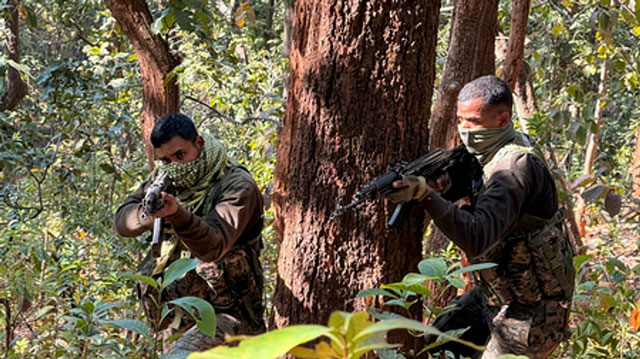
Police said sustained operations by Chaibasa Police, supported by security forces and intelligence agencies, helped tighten the security cordon around Maoist strongholds.
Officials attributed the surrenders to growing disillusionment among cadres with the Maoist organisation, resentment over alleged internal exploitation and the impact of community policing and outreach programmes.
According to police data, 113 Maoists, including senior leader Misir Besra, had been arrested across Jharkhand till August 15. Another 50 Maoists surrendered during the period, including several cadres whose organisational strength had weakened.
Police said 22 Maoists were also killed in encounters during the ongoing anti-Naxal operations.
The developments mark a significant shift in Saranda, an area long associated with Maoist activity and difficult terrain. Police said the combination of security operations, intelligence gathering, surrenders and increased engagement with local communities has helped bring large parts of the region under government control.
Authorities are now focusing on strengthening their presence and public services in remote areas so that the gains achieved through the anti-Naxal campaign can be sustained.