Daijiworld Media Network - New Delhi
New Delhi, Aug 25: The Centre has proposed a complete ban on the widely used insecticide carbosulfan, citing concerns over its potential risks to human and animal health, environmental toxicity and the absence of a specific antidote in cases of accidental poisoning.
The Agriculture Ministry had constituted a high-level expert committee on January 14, 2026, to examine the continued use of carbosulfan registered in India. The committee submitted its report to the government on June 12, recommending a complete prohibition of the pesticide, including its manufacture, import, transport, distribution, sale and use under the Insecticides Act, 1968.
The government has now moved ahead with the proposal through a draft notification. The proposal will remain open for public comments and suggestions for 30 days after its publication, following which the final prohibition may come into force.
According to the expert panel, carbosulfan is a highly hazardous carbamate insecticide that is rapidly metabolised into carbofuran, a highly toxic compound that can cause severe cholinesterase inhibition and acute systemic toxicity.
The committee also highlighted significant toxicity to birds, pollinators, aquatic organisms and other non-target species, besides noting that several countries have taken regulatory action to restrict or prohibit the chemical.
The panel further observed that although atropine and supportive treatment can be used to manage symptoms, there is no specific antidote capable of reversing carbosulfan poisoning.
The government has therefore concluded that continued use of the insecticide could pose significant risks to public health and the environment.
The proposed action comes amid a wider tightening of pesticide regulation in India. The government had earlier initiated steps towards restrictions on paraquat dichloride, with an expert committee examining its continued use.
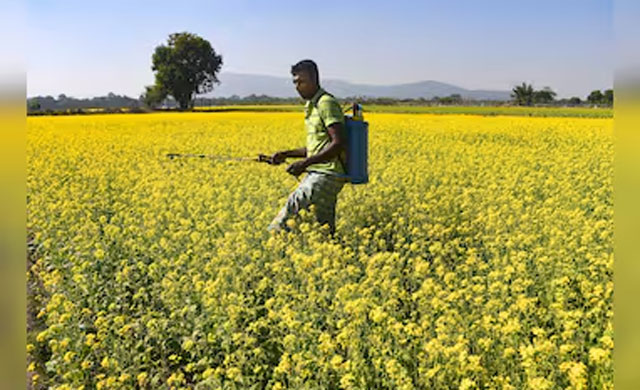
Carbosulfan is currently used extensively in crops including rice, cotton, chilli, brinjal and cumin. It is commercially available in formulations such as carbosulfan 25 per cent EC and seed-treatment products.
According to the Food Safety and Standards Authority of India, carbosulfan is classified by the Central Insecticides Board and Registration Committee as highly toxic, while the WHO classification listed on the FSSAI pesticide database places it in Category II, or moderately hazardous.
Current registrations cover its use in rice against pests including gall midge, stem borer, leaf folder and various plant hoppers. It is also registered for use against aphids and thrips in cotton, sucking pests in cumin and chilli, and shoot and fruit borer in brinjal. Carbosulfan 25 per cent EC and other approved formulations continue to appear in India's pesticide regulatory records.
Industry estimates put the domestic market for carbosulfan-based products at around Rs 250 crore to Rs 400 crore annually, covering technical and formulation sales.
The proposed ban, however, has drawn concern from the plant protection industry, which argues that carbosulfan remains an important pest-control tool for Indian farmers.
A senior industry representative said the chemical is valued for its broad-spectrum and rapid action against sucking pests, stem borers, leaf feeders and soil pests. The representative argued that India's farmers are already facing increasing pest pressure, resistance to existing chemicals and a shrinking portfolio of crop-protection products.
According to the industry, carbosulfan works through contact and systemic action by inhibiting acetylcholinesterase in insects, disrupting their nervous system and providing quick control of economically damaging pests.
The industry also contended that carbosulfan is not carcinogenic, mutagenic, teratogenic, a reproductive toxin or an endocrine disruptor, citing scientific studies. It claimed that the chemical degrades relatively quickly in soil and water and does not significantly bioaccumulate when used according to approved directions.
The industry representative said carbosulfan generally requires about 400 ml to 800 ml per acre depending on the crop, formulation and level of pest infestation, making it an economical option for farmers.
The chemical has also been used as a seed treatment in cotton and has gained importance in managing gall midge outbreaks in southern and eastern rice-growing areas, where farmers have relatively limited alternatives.
The industry further argued that carbosulfan provides an alternative mode of action in resistance-management programmes and helps prevent excessive dependence on newer pesticide chemistries.
The proposed ban could also have implications for India's agrochemical industry. More than 30 to 50 companies are estimated to be directly or indirectly involved in carbosulfan's technical manufacturing, formulation, repacking, distribution and marketing.
The broader Indian pesticide industry is highly fragmented, with thousands of formulation units and more than 65,000 entities across the pesticide value chain, including manufacturers, MSMEs, distributors, retailers and ancillary businesses.
Industry representatives warned that removing another registered pesticide molecule could increase pest-management risks and potentially affect crop yields, particularly in areas where farmers have few alternatives.
“Further reduction in available chemistry could expose Indian agriculture to greater pest risks, resistance challenges and yield losses,” the industry representative said, arguing for a science-based regulatory approach focused on safe and responsible use rather than an outright ban.
The government, however, is proceeding with the draft proposal based on the expert committee's findings on toxicity and environmental risks. India's official pesticide information portal currently lists carbosulfan as a highly toxic insecticide, while the government's broader pesticide regulatory framework provides for restrictions or bans where safety concerns warrant such action.
The final decision will be taken after the 30-day period for public comments and consideration of representations from stakeholders, including farmers, manufacturers and other industry participants.