Daijiworld Media Network – Panaji
Panaji, Sep 18: Scientists from Goa are set to explore the largely unexplored depths of the Andaman Sea as part of a joint expedition to study ancient underwater volcanoes and mineralisation linked to submarine volcanic activity.
The CSIR-National Institute of Oceanography (CSIR-NIO), Goa, has partnered with the Geological Survey of India (GSI) for a remotely operated vehicle (ROV) expedition to investigate cratered seamounts and the surrounding seabed.
The collaboration follows an MoU signed last month between GSI Deputy Director General and Head of the Marine and Coastal Survey Division Dr N M Shareef and CSIR-NIO Director Prof Sunil Kumar Singh in the presence of senior officials.
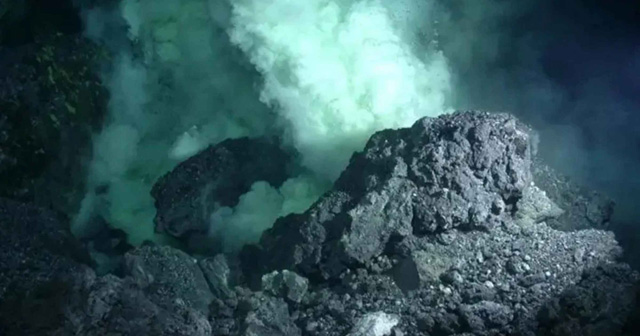
The expedition will deploy an unmanned, remotely controlled underwater vehicle to examine seabed formations and volcanic structures that are difficult to access directly. Scientists will study the seamounts, their craters and surrounding areas, with a particular focus on marine hydrothermal mineralisation.
Cratered seamounts are ancient underwater volcanic mountains featuring circular or elliptical depressions, including craters or calderas, at their summits. Such formations can provide clues about past volcanic activity, including collapse and explosive processes, and help scientists understand the geological evolution of the seabed.
The expedition will also examine the biological significance of the seamounts, which can support distinctive deep-sea ecosystems and serve as biodiversity hotspots.
The Andaman Sea forms part of the broader Burmese-Andaman-Western Sunda tectonic system, which developed primarily through the oblique subduction of the Indian-Australian plate beneath the Burma microplate and Sunda Plate. The system extends from Myanmar through the Andaman Sea and Andaman-Nicobar region towards northern Sumatra and the Indonesian volcanic arc.
The region is an actively developing back-arc basin, with its geological evolution shaped by back-arc spreading, strike-slip faulting, earthquakes and submarine volcanism.
The Andaman Sea is also home to Barren Island, an active volcano that has experienced historic and recent eruptions, and Narcondam, a volcanic island generally regarded as dormant or inactive.
Marine geophysical studies have mapped numerous submarine volcanic formations and identified a volcanic trend extending from south of Sumatra towards the Barren Island and Narcondam sector. The number of mapped submarine volcanoes varies depending on the survey area and methodology, with one study reporting 23 and a later regional analysis identifying 33.