Daijiworld Media Network - Margao
Margao, Sep 19: The Cuncolim Municipal Council’s rejection of an application seeking a construction licence for a proposed fish meal plant has brought renewed focus on the functioning of existing fish meal and fish processing units at the Cuncolim Industrial Estate and their compliance with pollution-control norms.
The decision has been welcomed by local residents who have been campaigning against fish meal and fish processing units in the industrial estate. However, residents have now raised questions over the status of the existing units and whether they are complying with the conditions and directions prescribed by the Goa State Pollution Control Board (GSPCB).
Residents have for years raised concerns over alleged air and water pollution from some of the units and expressed apprehension that additional fish-processing facilities could aggravate the problems they claim to have experienced.
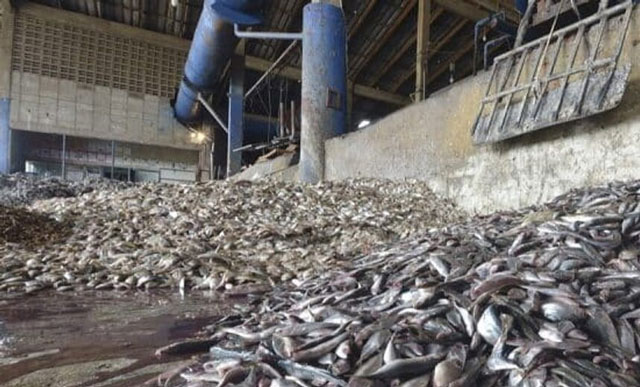
The rejection of the construction licence application has therefore shifted attention to the operation of the existing units, including the effectiveness of regulatory monitoring and enforcement.
Leader of Opposition Yuri Alemao described the municipal council’s decision as a victory for the people of Cuncolim. The issue has also prompted questions over what further measures are required to address concerns relating to the existing units.
With the fishing season commencing on August 1 and activity increasing, attention has turned to whether the directions issued by the GSPCB to fish meal and fish processing units are being implemented on the ground.
Among the directions issued by the pollution control board is that fish must be transported only in insulated vehicles to prevent deterioration during transit. Wastewater generated during transportation is required to be discharged at the respective processing plants and treated in their Effluent Treatment Plants (ETPs), rather than being released on roads or into drains.
The GSPCB has also prohibited the processing of spoiled or decomposed fish and directed units to accept and process only fresh fish.
The directions also require vehicles leaving the premises to be thoroughly washed in a designated contained area. Units are required to operate a wheel-washing system before vehicles leave the facility, while unloading areas must have a berm to prevent runoff.
All wastewater generated at the facility is required to be channelised to the ETP for treatment. The Board has also recommended that companies consider establishing standby raw-material storage facilities of adequate capacity.
The key question now is whether these conditions are being effectively followed by the existing units and whether the GSPCB has conducted recent inspections to verify compliance.
The controversy has thus brought two interconnected issues into focus — the municipal decision on new fish-processing facilities and the regulatory monitoring of existing units at the Cuncolim Industrial Estate.