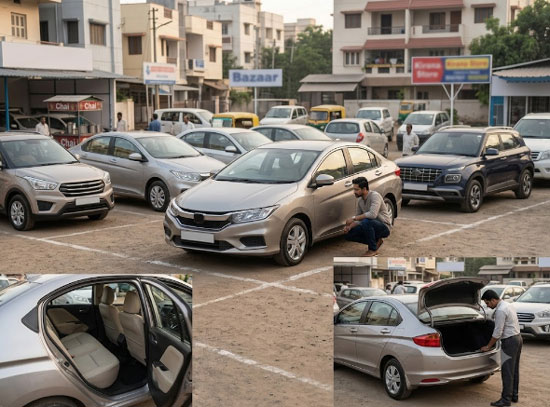
Walk into any dealership today and the pitch starts with ground clearance. Everyone wants a tall car. Yet the Honda City keeps selling, keeps holding its value, and keeps turning up on shortlists next to compact SUVs at identical price points.
That's genuinely unusual for a sedan right now. Understanding why means looking at what the City actually does well - and where it quietly asks you to compromise.
The Sedan Question Nobody Asks Out Loud
Here's the worry most buyers don't say out loud: does choosing a sedan mean buying something nobody will want in three years? It's fair. Resale is exactly where most sedans have bled as buyer preference drifted toward crossovers and SUVs.
The City is the exception. Run the ownership maths yourself. Service intervals are long, the 1.5-litre i-VTEC petrol has a well-earned reputation for running past a lakh kilometres on basic care, and consumables stay affordable across most cities.
Anyone who's actually worked through a second hand honda city ownership cost against a comparable compact SUV usually walks away surprised - the sedan costs less to run. Lighter kerb weight, better real-world fuel economy, cheaper tyres. That's the whole explanation, basically.
There's a second reason the City holds on. Fleet buyers, self-drive rental operators, and long-distance commuters still prefer sedans for highway stability and boot space. That steady demand stops used-market prices from collapsing the way they do with less popular body styles.
How It Actually Feels Behind the Wheel
The driving experience is where the City makes its real argument. An SUV sits higher, feels commanding at traffic lights. The City sits low - and that's the point, not a flaw.
Body roll is minimal. Steering weights up cleanly above 80 kmph. On undulating highways, the car settles into a rhythm that tall crossovers rarely manage, because physics doesn't care about fashion.
The CVT splits opinion, and both camps have a point. It's smooth in city traffic and genuinely well-suited to stop-start commuting. Push it hard and the engine drones as revs climb before speed catches up.
Commuters will love it. Drivers who enjoy overtaking on open roads may prefer the six-speed manual, which is one of the better shifters in this segment.
Ground clearance is the honest weak point. The City clears most speed breakers but scrapes on badly built ones, especially with four adults and luggage on board.
The fix is simple enough: approach tall breakers at an angle rather than head-on, and don't overload the boot on rough village roads. It becomes second nature quickly..
What to Check Before Signing Anything
The part nobody tells you upfront: which generation is on offer matters enormously. The fourth generation, sold through the middle of the last decade, is more compact with a slightly firmer ride character.
The fifth generation brought a longer body, a bigger boot, improved rear seat space, and a much better touchscreen setup. The hybrid e:HEV models introduced Honda Sensing driver assistance to the range, a meaningful difference if that kind of tech matters to you.
Beyond generations, specific checks matter more than everything else combined:
- Service history from an authorised workshop, especially CVT fluid change records, which sellers conveniently forget to mention with suspicious frequency
- Rear suspension bush condition; worn bushes knock over broken roads and get expensive fast
- Air conditioning cooling at idle, a common weak spot on neglected examples
- Underbody scrape marks, because these tell you more about how a car was driven than the seller ever will
- Tyre age, since low-usage household cars often sit on hard, ageing rubber that looks fine but isn't safe
Location changes the equation too. Cars from cities with better road surfaces generally show less underbody stress.
Anyone browsing a used Honda City in Hyderabad will find a healthy mix of privately owned and lightly used examples.
Where the City Genuinely Falls Short
Most people think acknowledging a car's shortcomings means talking it down. That's not what this is. The City is genuinely good. But the compromises are real.
Rear headroom is adequate rather than generous for taller passengers - the sloping roofline sees to that. Boot loading height is higher than some rivals. On broken roads, the low nose demands a level of attention that SUV drivers never develop.
You'll learn to read road surfaces. Whether that's annoying or satisfying depends entirely on your temperament.
So it comes down to priorities. Buyers who value highway composure, running costs, and a settled ride will find the City still makes sense. Those who need clearance for rural roads, or regularly carry tall passengers in the back, should look upward. Knowing which camp you're in before you sign saves considerable regret later.