Daijiworld Media Network - New Delhi
New Delhi, Sep 24: A combination of phentermine and topiramate was associated with a reduction in uric acid kidney stone volume among patients with obesity and diabetes in an 18-month open-label feasibility trial. The intervention group also recorded greater weight loss and favourable changes in several urinary risk factors.
The prospective study involved 19 participants with obesity, diabetes mellitus, normal kidney function, urine pH below 5.8 and stones containing at least 80 per cent uric acid. Participants were randomly assigned in a 2:1 ratio to receive phentermine 18.75 mg/topiramate 100 mg or pragmatic control treatment.
The researchers used dose escalation and assessed changes in stone volume measured through computed tomography as the primary outcome. Secondary outcomes included medication adherence, safety, body measurements, laboratory findings and changes in body composition.
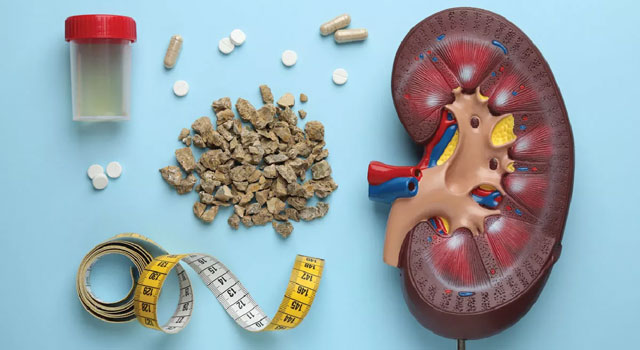
Fifteen participants completed the study, with medication adherence recorded at 73 per cent. No serious adverse events were reported.
In the intention-to-treat analysis, stone volume decreased by 52 per cent in the intervention group, compared with an 8.6 per cent increase among controls. However, the difference did not reach statistical significance (P=0.10).
The per-protocol analysis showed a statistically significant reduction in stone volume (P=0.02).
At the end of the study, participants receiving phentermine/topiramate also recorded greater weight loss, with an average reduction of 10.2 kg compared with a 2.9 kg increase in the control group. The intervention group also recorded a greater reduction in haemoglobin A1c, with a change of -0.2 compared with +0.5 among controls.
The intervention group had lower 24-hour urinary citrate levels, at 309±81 mg compared with 951±782 mg in the control group, and lower uric acid supersaturation, at 0.7±1.1 compared with 1.8±1.0.
At the same time, the intervention group recorded a higher 24-hour urine pH of 6.2±0.5 compared with 5.5±0.4 in controls, as well as higher calcium phosphate supersaturation of 0.9±0.8 compared with 0.2±0.1. The reported differences were statistically significant.
The researchers concluded that phentermine/topiramate was well tolerated and was associated with significant reductions in stone burden in the per-protocol analysis among patients with obesity, diabetes mellitus and uric acid nephrolithiasis.
The treatment was also associated with greater weight loss, higher urinary pH, and lower haemoglobin A1c and urinary citrate levels.
However, the researchers noted important limitations. The study was an open-label feasibility trial involving only 19 participants, and the primary intention-to-treat analysis did not demonstrate a statistically significant difference in stone volume.
The findings provide a basis for further research into phentermine/topiramate as a potential approach to managing uric acid kidney stones in a broader population of patients with obesity and diabetes.