Daijiworld Media Network - Washington
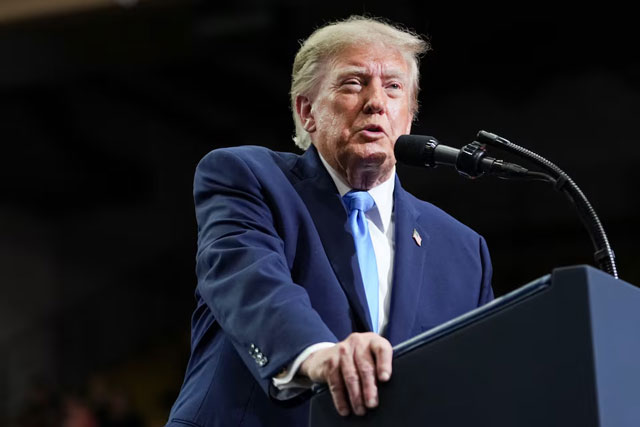
Washington, Oct 20: US President Donald Trump's approval rating has fallen to a record low of 31 per cent, as rising petrol prices and concerns over the economy weigh on public opinion ahead of the November 3 congressional elections, according to a Reuters/Ipsos poll.
The four-day poll, which closed on Monday, found that Trump's approval rating had dropped by one percentage point from two weeks earlier, marking the lowest level recorded during either of his presidential terms.
The survey also showed Democrats leading Republicans by 47 per cent to 35 per cent among registered voters when asked which party they would support if congressional elections were held today. The 12-point lead was the Democrats' widest advantage during the current election cycle, potentially strengthening their efforts to regain control of Congress. However, national polling does not necessarily reflect the state-by-state and district-level contests that determine control of the House of Representatives and the Senate.
A previous Reuters/Ipsos poll conducted two weeks earlier had shown Democrats leading by seven percentage points, with 44 per cent support against 37 per cent for Republicans.
The latest survey indicated that women were contributing significantly to the Democrats' growing lead. Around 50 per cent of female voters said they would vote for Democratic candidates, compared with 32 per cent who favoured Republicans. Men also leaned towards Democrats, though the gap was narrower.
Trump's approval has come under pressure following US military strikes on Iran in February alongside Israel. The conflict contributed to a surge in petrol prices, adding to financial pressures on American households.
Around 68 per cent of respondents disapproved of Trump's handling of the economy, including 37 per cent of self-identified Republicans. When asked which party would manage the economy better, 40 per cent favoured Democrats, compared with 33 per cent who backed Republicans.
The poll surveyed 1,679 US adults online, including 1,279 registered voters. The margin of error was two percentage points for all respondents and three percentage points for registered voters.
Losing control of either chamber of Congress could make it more difficult for Republicans to advance Trump's legislative agenda during the final two years of his term.