Daijiworld Media Network – Udupi
Udupi, Oct 24: Former Tamil Nadu BJP president and former IPS officer K Annamalai has mounted a strong challenge to the Union government's reported proposal to impose a merchant discount rate (MDR) on Unified Payments Interface (UPI) transactions, warning that the move could disrupt India's thriving digital payment ecosystem.
Comparing UPI to a hen that lays golden eggs every day, he urged the Centre to nurture the system rather than jeopardise its growth by introducing charges prematurely.
“UPI is like a hen that lays a golden egg every day. If you kill it expecting to get a hundred eggs at once, you will end up with nothing. UPI is generating value every day, so instead of disrupting its growth by imposing charges, we should allow it to flourish and continue contributing to the economy,” said Annamalai, founder of the We The Leaders Foundation.
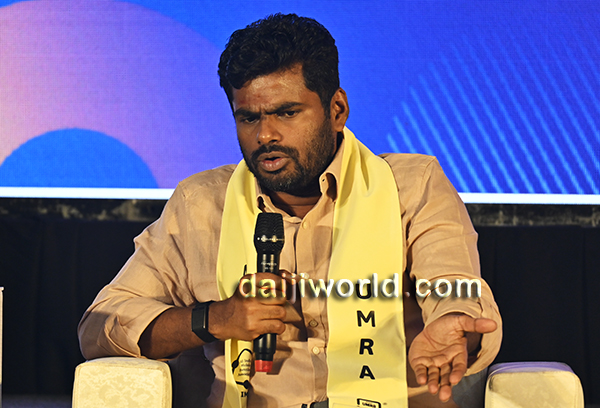
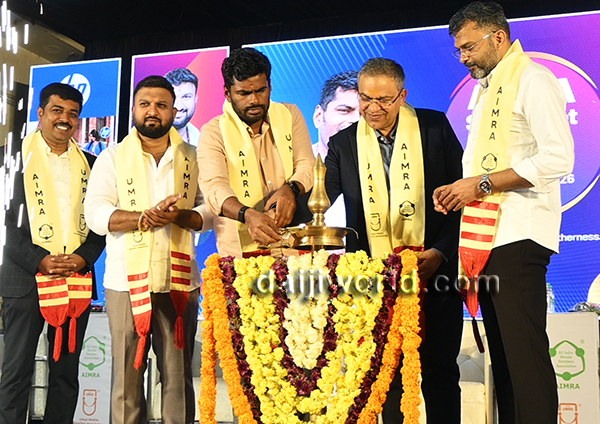
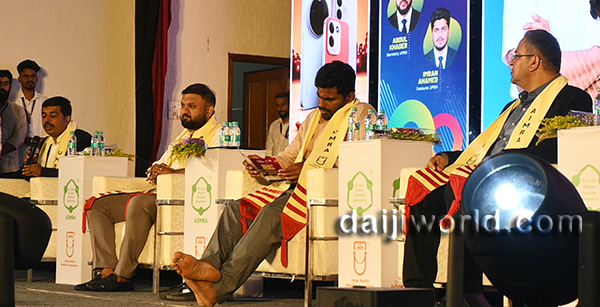
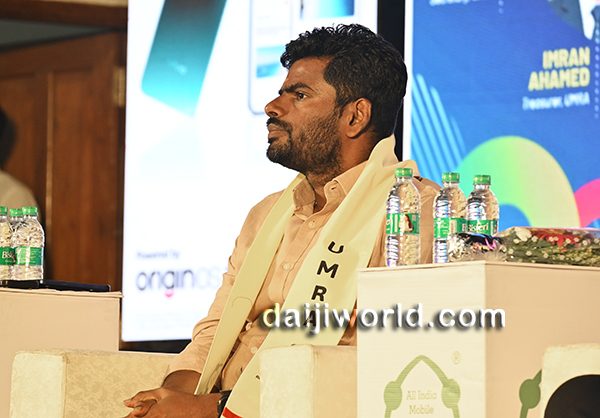
He was addressing the AIMRA State-level Retailers Expo and 12th anniversary celebration at Town Hall, Ajjarkad, on October 24. Speaking to the media in Udupi later, he reiterated his concerns over the proposed charges and called on the Centre to reconsider its approach. His remarks came amid sharp criticism from the BJP over his earlier reference to the party as the ‘Cockroach Janata Party’.
UPI's phenomenal growth driven by zero charges
Annamalai said India had emerged as the world's largest UPI market, with transactions worth Rs 30 lakh crore recorded in August 2026. He recalled that the government's decision to make UPI transactions free in 2020 had accelerated adoption across the country, including among rural users who were unfamiliar with English.
Speaking as both a consumer and a citizen, he argued that keeping transactions free had been crucial to UPI's widespread acceptance and phenomenal growth.
“UPI became bigger and more widely accepted because it was made free. If a merchant discount rate of 0.4% is introduced, it may affect only 4% of merchants, but those merchants account for 67% of the total transaction value. Similarly, only 4% of transactions may be affected, but the value involved is substantial,” he said.
Annamalai noted that although the proposed charges might affect a relatively small proportion of merchants and transactions, the financial value involved was considerable. He cautioned that the government should not underestimate the potential consequences of altering a system that had become central to everyday payments.
He also recalled that a former finance minister had expressed doubts about UPI adoption, but Indians had subsequently embraced the platform on an unprecedented scale.
‘Why can't the government treat it as an investment?’
Questioning the Centre's financial rationale, Annamalai said the Finance Ministry had indicated that the proposed charges would not generate direct revenue for the government. He said around 40% of the amount collected was reportedly expected to go to customers' banks, while the estimated collection under the proposed MDR was around Rs 15,000 crore.
“The government says that money is spent from the public exchequer to facilitate UPI transactions. But why can't the government consider this an investment in improving the country's economy?” he asked.
Pointing to the scale of India's public finances, he questioned whether the government could continue supporting the digital payment infrastructure rather than introducing charges.
“India's annual budget is around Rs 50 lac crore, and the amount being discussed is Rs 15,000 crore. The government has deferred the decision until Deepavali. I hope sustained opposition from merchants and consumers will persuade the government to reconsider the proposal,” he said.
Annamalai maintained that the amount involved should be viewed in the context of UPI's wider contribution to economic activity. He urged the Centre to give the digital payment ecosystem more time to mature before considering additional transaction charges.
Warns against splitting bills to avoid charges
Annamalai also pointed out that some consumers were attempting to avoid additional charges by splitting payments into separate bills. He cautioned that such practices could undermine the convenience and efficiency that had made UPI popular among consumers and merchants alike.
He said the priority should be to preserve the simplicity of digital transactions and encourage wider adoption, rather than introduce measures that could prompt users to alter their payment habits.
Calling for an alternative approach, Annamalai urged the government to consider subsidising UPI transactions instead of imposing charges. Such support, he argued, would help India move towards 100% digital payment adoption and enable the system to continue expanding without placing an additional burden on merchants and consumers.
He expressed hope that the government would listen to the concerns raised by traders and users and allow the UPI ecosystem to develop further before taking a decision on any additional charges.
‘Let the questions I raise become questions people also ask’
Annamalai said the government should take a considered approach to decisions that could affect a widely used public payment system. He reiterated that introducing charges at this stage was not appropriate and expressed hope that the proposal would be reconsidered after sustained representations from merchants and consumers.
“This is my personal opinion. The government listens to everyone's views. I hope there will be good news after Deepavali,” he said, referring to the government's decision to defer the proposal until the festival.
He also expressed hope that India would eventually become a nation where 100% of the population used UPI, and urged the government to reconsider its decision and take an appropriate call after five or ten years.
“Let the questions I raise become questions that people also ask,” he said.
Calls for protection of local retailers
Broadening his argument beyond digital payments, Annamalai stressed that national sovereignty was not limited to protecting the country's borders but also involved safeguarding its economic ecosystem.
He urged local MPs to raise retailers' concerns in Parliament, introduce private members' bills where necessary and exert pressure on the Union Finance Ministry to ensure that multinational companies operated under adequate checks and did not drive local retailers out of business.
Annamalai said protecting India's economic interests also required ensuring a fair environment for domestic traders, who play a vital role in the country's commercial ecosystem. He called for policies that would support local businesses while allowing digital payment systems to grow without undermining the interests of merchants and consumers.