Daijiworld Media Network - Gurugram
Gurugram, Nov 4: The Gurugram administration has announced a series of measures to combat worsening air pollution, including a temporary ban on dust-generating construction and demolition activities from November 5 to 20.
The restrictions have been introduced in accordance with directions issued by the Commission for Air Quality Management (CAQM) to curb rising pollution levels across the National Capital Region (NCR).
As part of the measures, Haryana government departments and private offices in Gurugram have been directed to implement a 50 per cent work-from-home arrangement. Only half of the workforce will be permitted to attend offices physically, while the remaining employees will have to work remotely.
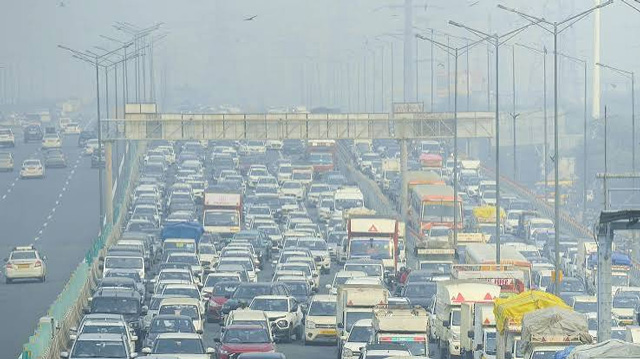
Deputy Commissioner Uttam Singh issued the order on Tuesday, directing all concerned establishments to strictly follow the revised arrangements during the specified period.
The construction ban applies to dust-generating activities involving highways, roads, flyovers, overbridges, pipelines and other linear infrastructure projects.
However, certain essential infrastructure projects have been exempted to prevent disruption of critical services. Construction work related to railways, metro networks, airports, hospitals, water supply, sanitation facilities and national security will be permitted to continue. Industrial establishments and essential services have also been excluded from the restrictions.
The administration has instructed offices to maintain employee attendance records according to their respective work rosters to ensure compliance with the 50 per cent physical attendance requirement.
Sub-Divisional Magistrates (SDMs) and officials of the Haryana State Pollution Control Board have been entrusted with monitoring the implementation of the orders. Daily inspections will be conducted to identify violations, and those found violating the directives will face legal action under the Commission for Air Quality Management Act, 2021.
Meanwhile, health experts have expressed concern over the impact of deteriorating air quality on public health.
Dr Randeep Guleria, Chairman of the Institute of Internal Medicine, Respiratory and Sleep Medicine at Medanta, Gurugram, warned that prolonged exposure to severely polluted air could pose serious health risks, particularly to people with existing respiratory and cardiovascular illnesses.
He identified children and elderly people as particularly vulnerable, cautioning that severe and very severe air quality conditions could aggravate existing health complications.
Dr Guleria said hospitals generally witness a rise in emergency cases involving breathing difficulties and persistent coughs when pollution levels increase. While some patients require hospitalisation, others may need treatment in intensive care units.
He added that even individuals without existing health conditions could experience chest tightness, breathlessness, coughing and irritation of the eyes when exposed to heavily polluted air.
Explaining the medical impact, he said pollutants can trigger inflammation in the lungs and blood vessels, worsening conditions such as asthma, chronic obstructive pulmonary disease (COPD) and heart disease. People with existing respiratory and cardiac ailments may experience increased breathing difficulties and reduced oxygen saturation levels.
Dr Guleria also highlighted the geographical and meteorological factors contributing to winter pollution across the Indo-Gangetic Plain. The region's landlocked geography, combined with low wind speeds during winter, prevents pollutants from dispersing effectively.
As a result, polluted air remains concentrated close to the ground, increasing public exposure to harmful particles. The combination of emissions and unfavourable weather conditions makes tackling air pollution particularly difficult during the winter season.