Daijiworld Media Network - Bengaluru
Bengaluru, Nov 28: Despite rising traffic congestion and road accidents, compliance with basic road safety norms remains alarmingly low across Karnataka, with only 15 per cent of two-wheeler riders wearing helmets properly, a new study by NIMHANS has revealed.
Titled 'Status Summary Report 2026: Road Safety Risk Factors in Karnataka, India', the report was released at NIMHANS recently. It highlights a sharp decline in helmet usage in Bengaluru, which dropped from 88 per cent to 56 per cent, raising serious concerns over the enforcement of mandatory helmet rules. Proper helmet use in the city—defined as wearing a certified full-face or half-face helmet with the strap securely fastened—also fell from 34 per cent to 25 per cent.
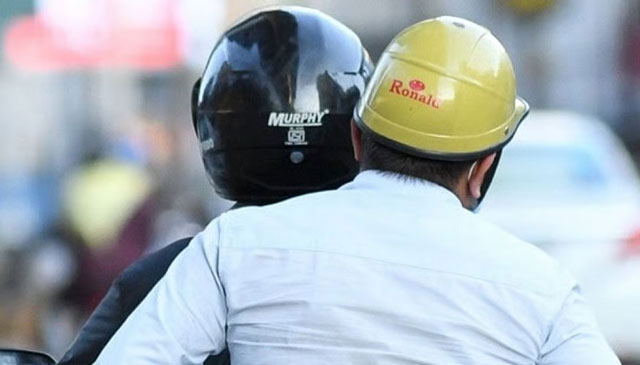
Representational image
Conducted by NIMHANS under the Bloomberg Philanthropies Initiative for Global Road Safety with technical support from the Johns Hopkins International Injury Research Unit, the study is based on over 10 lac observations of road users and vehicles across 48 locations for each risk factor between December 2025 and June 2026.
According to the findings, overall helmet usage across Karnataka stands at 30 per cent. While compliance in the Bengaluru Metropolitan Region (BMR) is 56 per cent, it drops significantly to 22 per cent outside the BMR. Pillion riders face particularly high risk, with only 5 per cent wearing helmets properly compared to 19 per cent of riders.
Seat-belt compliance among adults across the state is equally dismal at 22 per cent—40 per cent in the BMR and just 15 per cent in the rest of Karnataka. The use of child restraints is below 1 per cent, exposing young children travelling in vehicles to severe risk during crashes.
The study also recorded speeding in 24 per cent of vehicles, with SUVs (38 per cent), sedans (36 per cent) and light vehicles (34 per cent) accounting for the highest share of vehicles exceeding prescribed speed limits.
Stating that such behavioural studies had not been conducted at the state level earlier, Karnataka traffic and road safety commissioner K Parashurama called for making surveillance a routine component of road safety action plans to enable targeted enforcement.
To improve compliance and reduce crashes and injuries, the report recommends focused law enforcement, road engineering interventions and strategic communication campaigns.