Daijiworld Media Network - Nagpur
Nagpur, Dec 14: Ahead of the Brihanmumbai Municipal Corporation elections, Maharashtra chief minister Devendra Fadnavis on Sunday reaffirmed that Mumbai “was, is, and will remain” an inseparable part of Maharashtra, dismissing claims of any attempt to separate the city from the state.
Without directly naming the Shiv Sena (UBT) or MNS, Fadnavis said such allegations surface around election time but lack substance. “Maharashtra will move forward at full speed, guided by the principles of Chhatrapati Shivaji Maharaj and the Constitution by Dr Babasaheb Ambedkar. Our goal is to become the first trillion-dollar economy by 2030 and achieve Viksit Maharashtra by 2047,” he said in response to last week’s Assembly motion.
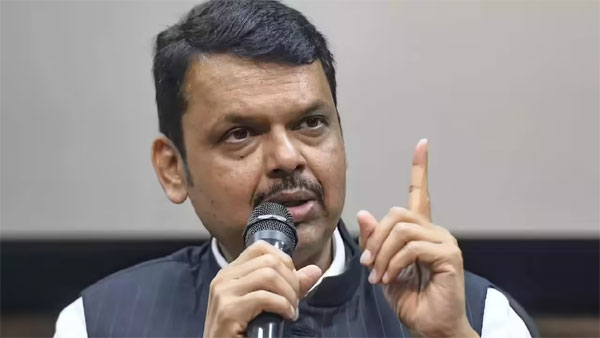
He urged opposition parties to cooperate with the government for uninterrupted growth, while strongly rejecting claims that Maharashtra is headed toward bankruptcy. According to Fadnavis, the state’s public debt stands at 18.87% of its GDP, below the 25% limit set by the RBI and FRBM Act, and the fiscal deficit is 2.76%, under the 3% threshold.
Highlighting Maharashtra’s economic performance, Fadnavis noted that the state continues to attract the highest share of Foreign Direct Investment (31%), signs MoUs for renewable energy projects, and is pursuing ambitious targets such as 16,000 MW of solar capacity for agriculture by 2030. He added that Maharashtra aims to generate 52% of its power from renewable sources and eliminate drought through major irrigation projects, including interlinking rivers like Nalganga and Vainganga.
The CM pointed to regional development, citing Marathwada’s Sambhajinagar emerging as an electric vehicle hub, Gadchiroli as an industrial magnet, and plans to develop the region as a gateway to South India through a new airport. Investment initiatives include Rs 17.57 lakh crore signed at the Davos summit between 2022-2025, with 75% implementation, and Rs 13.75 lakh crore under the Package Scheme of Incentives in Vidarbha and Marathwada.
In the energy sector, Maharashtra’s contractual power capacity is projected to reach 47,000 MW by 2030 and 82,000 MW subsequently, while average power purchase rates have dropped to Rs 3 per unit, with an expected annual reduction of 2% for the next five years.
Fadnavis also reaffirmed the government’s commitment to crop loan waivers, with implementation targeted by July 1 next year, following recommendations from a high-level committee.
Infrastructure projects highlighted by the CM include the Rs 86,000 crore Nagpur-Goa-Shaktipeeth Expressway, the Mumbai-Kalyan-Latur-Hyderabad Jan Kalyan Marg, the Samruddhi Marg, and the Delhi-Mumbai Industrial Corridor, aimed at boosting industrial growth across the state.
Regarding Mumbai’s urban development, Fadnavis said the city’s metro network will expand from 91 km to 132 km within two years, with 50 km currently under construction.