Media Release
Mangaluru, Jan 30: Addressing a diverse assembly of global scholars and students, Vijaya Kranti, assistant commissioner of police (ACP) Mangaluru South sub-division, delivered a call to action centered on youth empowerment and active citizenship. Serving as the chief guest at the valedictory programme of the two-day international conference on ‘Promoting Peaceful and Inclusive Societies for Sustainable Development', she urged the younger generation to stay focused on their professional goals while serving as 'police friends' in the pursuit of a safer society.
ACP Vijaya Kranti further noted that the police department is committed to unbiased service and encouraged students to view law enforcement as a supportive framework for their personal and collective growth. She shared vital safety information with the student community, noting that the Mangaluru police have successfully reduced response times for the 112 helpline to just seven to eight minutes.
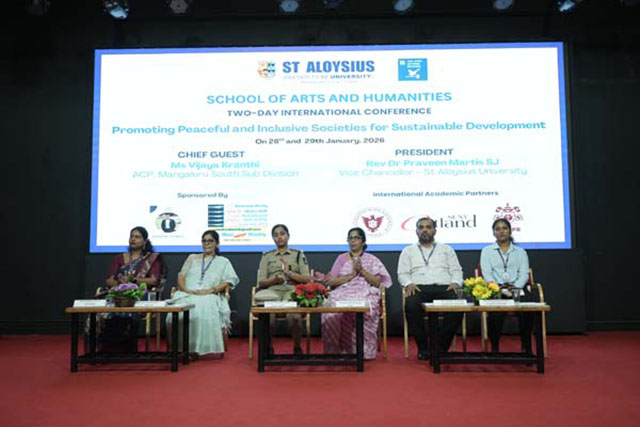
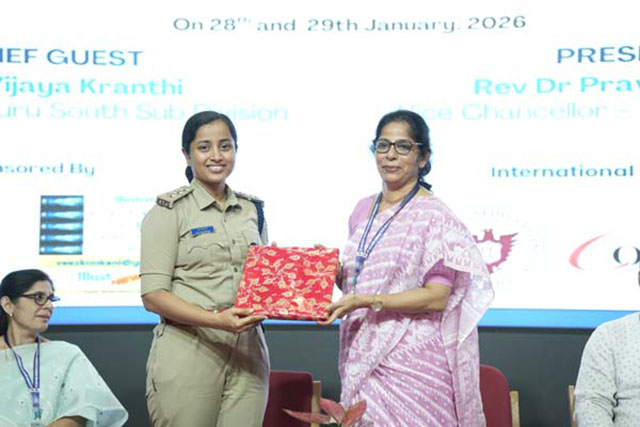
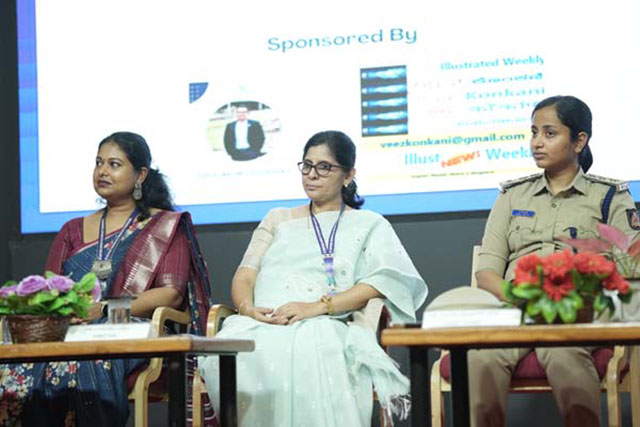
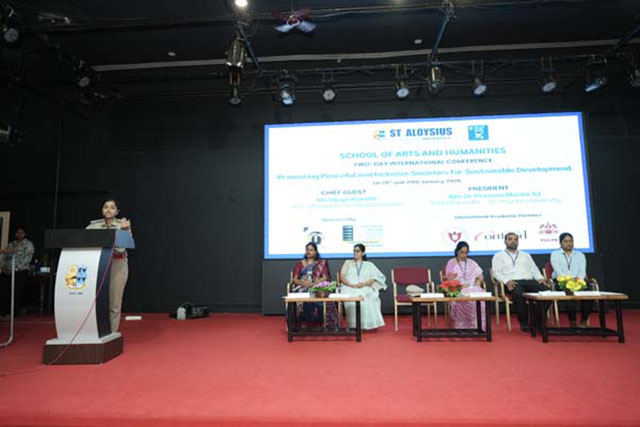
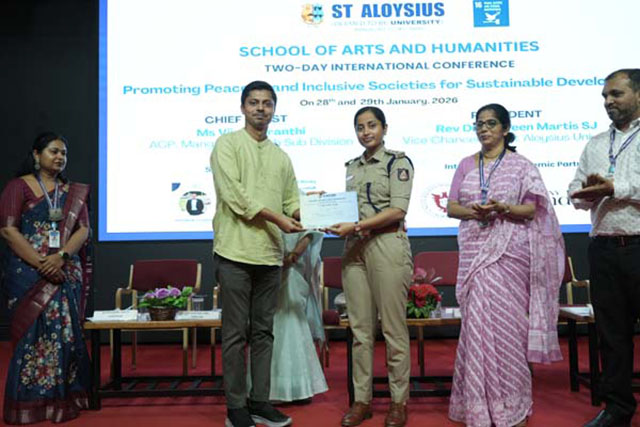
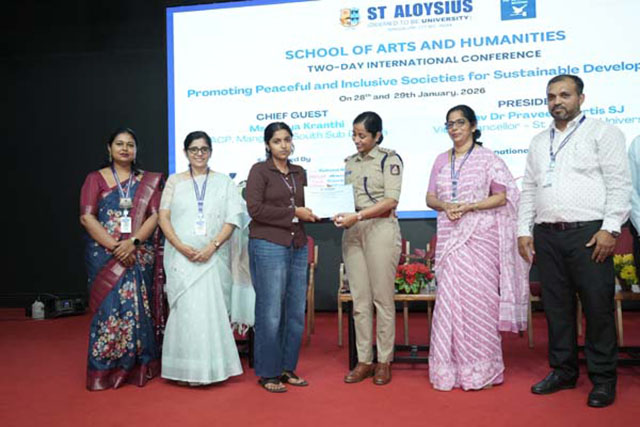
To modernize reporting, ACP Vijaya Kranti pointed to anonymous QR codes set up by the city police for reporting crimes or drug abuse within campuses. She specifically urged those struggling with addiction to utilize the dedicated drug helpline, 1933, for support. She underscored the gravity of the rule of law by warning against the legal consequences of assisting in organized crime and the strict penalties associated with the POCSO Act and cyber laws regarding child pornography.
During the proceedings, Devishree Shetty, the conference convener, presented a comprehensive report detailing the significant academic inquiries conducted over the two-day event. The conference, held on January 28 and 29 was a collaborative effort between the School of Arts and Humanities at St Aloysius (Deemed to be University) and international partners including Sophia University, SUNY Cortland, and PUCPR. Shetty highlighted that the forum successfully addressed the pillars of UN Sustainable Development Goal 16 through technical sessions on peace economics, religious harmony, and the ethical implications of artificial intelligence.
In her presidential address, Dr Rose Veera D’Souza, chairperson of the conference and dean of the School of Arts and Humanities, reflected on the institution's responsibility to foster ‘livable societies’ rather than just technically advanced ones. She advocated for the creation of ‘neutral spaces’ such as parks, gardens, and libraries where dialogue can flourish away from polarised environments. She concluded with a call for the conference to serve as a ‘torchbearer’ for transformation, inspiring delegates to return to their communities and translate academic insights into meaningful action.
The event also recognised outstanding scholarly contributions, with best paper awards presented to Dr Sali Augustine for research on human security, Kiran Anthony for work on indigenous culture and sustainable development, and Gayatri Krishna for her research on sustainable products. The valedictory program also celebrated local and national cultures through a cultural programme.