Daijiworld Media Network - Panaji
Panaji, Dec 19: December 19 marks a significant milestone in Goan history, as the coastal state was liberated from Portuguese rule and formally integrated with India on this day in 1961, bringing an end to 451 years of colonial domination.
Unlike most of the Indian subcontinent, which gained independence from British rule in 1947, Goa remained under Portuguese control. Portugal argued that Goa was culturally and religiously distinct from India and claimed it was an integral part of Portugal rather than a colony.
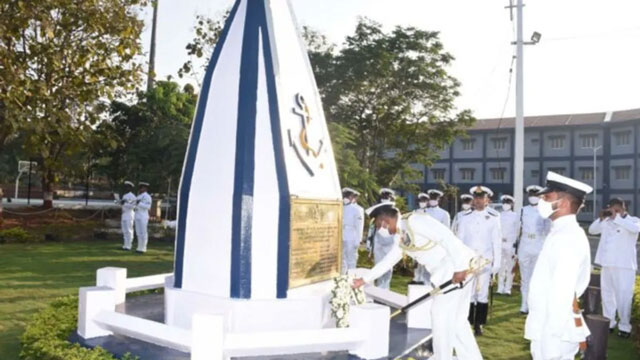
However, after years of sustained resistance and diplomatic efforts, the Indian government under Prime Minister Jawaharlal Nehru launched Operation Vijay to liberate Goa. The military operation, carried out by the Indian Armed Forces, lasted just over 36 hours and involved coordinated action by the Army, Navy and Air Force across land, sea and air, leading to the annexation of Goa, Daman and Diu with India.
The liberation was the culmination of decades of struggle, protests and underground movements led by several dedicated freedom fighters who worked tirelessly against Portuguese rule.
Widely regarded as the “Father of Goan Nationalism”, T B Cunha spearheaded the first organised movement to end Portuguese rule in Goa. After completing his education in France, he returned to India during Mahatma Gandhi’s mass movements against imperialism. Believing that Goa should be part of the national freedom struggle, he founded the Goa Congress Committee and ensured its affiliation with the Indian National Congress. From Mumbai, Cunha continued his campaign through writings and publications that strongly condemned Portuguese colonial rule.
An influential freedom fighter, Juliao Menezes played a crucial role in spreading nationalist consciousness among Goans. He established the Gomantak Praja Mandal to promote political awareness during Portuguese administration. Associated with the Indian National Congress in Portuguese Goa, Menezes served on its provisional committee and attended the party’s 1948 session. Alongside socialist leader Ram Manohar Lohia, he helped plan civil disobedience movements against the Salazar regime in Goa.
A lawyer by profession, Libia Lobo Sardesai made a lasting contribution to Goa’s freedom struggle by operating the underground radio station Voice of Freedom between 1955 and 1961. The broadcasts inspired resistance and unity across Portuguese-ruled Goa. After liberation, she became the first Director of Tourism for Goa, Daman and Diu, playing a key role in developing the region’s tourism sector. She was honoured with the Padma Shri in January 2025.
Poet, freedom fighter and diplomat, Vaman Sardesai actively supported the liberation movement and worked closely with his wife Libia in running Voice of Freedom. Post-liberation, he served as the second editor of Goa Today magazine, later joined the Indian Administrative Service, and went on to serve as India’s Ambassador to Angola. He too was conferred the Padma Shri.
Purushottam Kakodkar was a prominent leader in the Goa liberation movement. His activities led to his detention and deportation by Portuguese authorities. Upon his return, he set up an ashram in Margao, which became a discreet centre for freedom fighters. In June 1957, he was among 11 Goans who held consultations with Prime Minister Jawaharlal Nehru. After liberation, Kakodkar headed the Goa unit of the Indian National Congress and later represented North Goa as a Member of Parliament in the Lok Sabha.
As Goa commemorates its Liberation Day, the sacrifices and contributions of these leaders continue to inspire generations, reminding the nation of Goa’s long and determined journey to freedom.