Daijiworld Media Network - Mumbai
Mumbai, Jan 25: The growing closeness between Maharashtra Navnirman Sena (MNS) chief Raj Thackeray and Shiv Sena (UBT) president Uddhav Thackeray has become one of the most discussed developments in Maharashtra politics. Shiv Sena (UBT) leader and Rajya Sabha MP Sanjay Raut has now spoken in detail on the issue for the first time.
In an interview to a Marathi news channel, Raut described the reunion of the Thackeray cousins as a “political love story,” saying both leaders had taken a conscious decision to come together as a family after years of emotional and political distance.
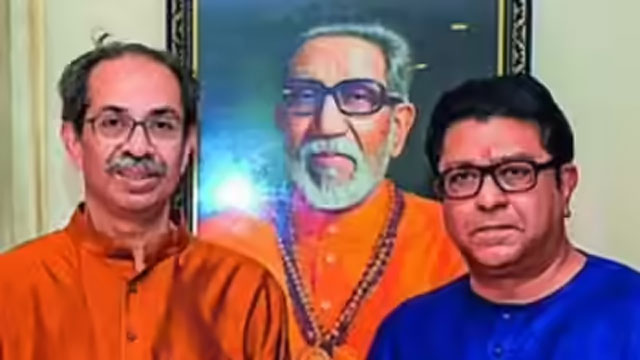
According to Raut, the process of reconciliation was initiated by Raj Thackeray himself during a recent interview, where he said he was willing to “take two steps back for Maharashtra and the Marathi people.” Raut said this statement triggered discussions between him and Uddhav Thackeray.
“Marathi people will no longer forgive us if we remain divided. Realising this, we took the initiative. Only if Marathi identity survives can Hindutva survive. With this belief, the talks moved forward,” Raut said.
He further said that the emerging political understanding places the Marathi identity at the centre of the agenda. “We are Hindus, no doubt about it. But today, the question of the existence of the Marathi people is more important. Therefore, Marathi politics comes first; Hindutva can be addressed later,” Raut stated, indicating a shift in political priorities.
While praising Raj Thackeray, Raut launched a sharp attack on Chief Minister Eknath Shinde and Deputy Chief Minister Ajit Pawar. He said Raj Thackeray had built his party from scratch and never staked a claim on Shiv Sena or attempted to split it, despite having the opportunity to do so.
“Raj Thackeray followed principles. On the other hand, Eknath Shinde and Ajit Pawar were handed over ‘ready-made’ parties by Amit Shah,” Raut alleged.
Political observers say the Raj-Uddhav rapprochement could significantly alter electoral equations in the state. The coming together of the two leaders is expected to halt the division of Marathi votes in key regions such as Mumbai, Thane, Pune and Nashik, posing a serious challenge to the ruling Mahayuti, particularly the BJP and the Shinde-led Shiv Sena.
The development has also strengthened Uddhav Thackeray’s moral position in the ongoing dispute over the “real Shiv Sena” following Eknath Shinde’s rebellion, with Raj Thackeray’s support adding weight to his claim.
Although Raut said it was difficult to predict what the future holds, political circles believe that if an alliance between the MNS and Shiv Sena (UBT) materialises and sustains, “Marathi asmita” is likely to emerge as the dominant election issue in Maharashtra.