Daijiworld Media Network – New Delhi
New Delhi, Jan 29: The Supreme Court on Wednesday expressed strong displeasure over the steps taken by various state governments to tackle the growing stray dog problem, warning that strict action may follow if adequate measures are not implemented.
Hearing the stray dogs case, a Bench comprising Justices Vikram Nath, Sandeep Mehta and N V Anjaria highlighted alarming figures from Assam, where 1.66 lakh dog bite cases were reported in 2024, while the state reportedly has only one dog centre.
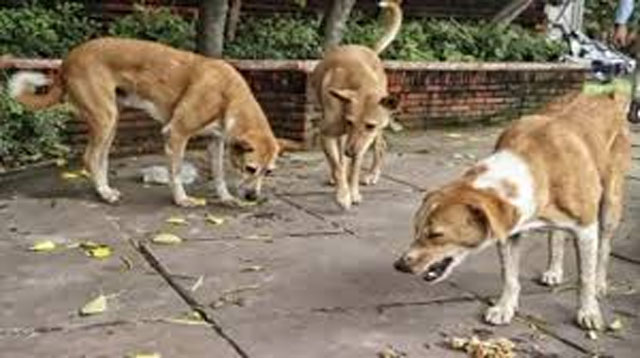
“It is astonishing. In 2024, there were 1.66 lakh bites. And in 2025 only in January, there were 20,900. This is shocking,” the court observed.
During the proceedings, several states submitted data related to sterilisation drives and other preventive measures. However, the Bench noted that many states have failed to take adequate steps, citing poor sterilisation rates, shortage of dog pounds, and lack of action in removing stray dogs from institutional campuses. The matter will continue to be heard on Thursday.
The apex court also raised doubts over Jharkhand’s claims of sterilising 1.6 lakh dogs in just two months, hinting that the figures could be inflated.
West Bengal, meanwhile, informed the court that 12,000 dogs were sterilised in 2024, prompting the Bench to question the effectiveness of such limited numbers.
“If a city has 1-2 lakh dogs and you vaccinate only 10-12,000 a year, how can you control the population?” the court asked.
Representing Delhi, Additional Solicitor General S D Sanjay told the court that the Chief Secretary had filed a detailed affidavit. The Bench noted that sterilising 68,000 dogs in eight months would still not be sufficient to control the stray population.
Amicus Curiae Siddharth Aggarwal pointed out that since the state government and municipal corporation are now working together, more centres could be set up to address the issue effectively.
The hearing also dealt with petitions seeking modification of earlier directions. On August 22, the Supreme Court had permitted stray dogs to be returned to their original areas after sterilisation and immunisation, except rabid or aggressive animals. It had also prohibited feeding stray dogs in public spaces, expanding the scope of the case beyond Delhi-NCR.