Ordering meat online can save you money, time, and one very annoying extra trip to the store. But if you've ever worried about freshness, food safety, or getting stuck with sad looking cuts, you're not alone..
Ordering meat from an online butcher sounds easy because it is easy. But a few small details can make the difference between a freezer win and a full refund fight.
If you know what to check before you buy, you cut most of the risk right away. You also shop with more confidence because you know what matters and what does not.
Today, shoppers can choose from meat delivery, a meat delivery service, or even a meat subscription that sends steaks delivered on a set schedule. With so many delivery services and retailers offering new deals every week, it helps to slow down and compare the basics first.
Ordering Meat Online Tips That Matter Most Before You Buy
Most people focus on price first. That makes sense, but price alone can fool you fast.
A cheaper box is not a better deal if the cuts are smaller, the shipping costs are high, or the insulated packaging fails. You have to look at the full picture.
Start with these core checks before adding anything to your cart.
- Read the full product description.
- Check the grade, cut, and origin.
- Look at packaging details.
- Review shipping times.
- Read the return policies.
- Plan how you'll store the meat.
That list is simple, but it works because each point affects quality and safety. And with online meat delivery, those are not small details.
It also helps to compare prices across a grocery store, a local grocery butcher, and online steak sellers. Sometimes higher prices reflect high-quality meat, better meat processing, or humanely raised and grass-fed beef programs.
Read The Product Details Like A Shopper Who Has Been Burned Before
This is where smart buying starts. If the listing is vague, that's a problem.
You should be able to see what cut you are buying, how much it weighs, whether it comes fresh or frozen, and where it came from. If those details are missing, move on.
Look for plain, specific wording. Ribeye should say ribeye, and a steak cut should match the label.
Boneless chicken thighs should not read like a mystery box. If you want filet mignon, chuck roast, pork chops, or bulk meat packs, the product page should spell that out clearly.
If the seller includes grade information, that helps too. The USDA beef grading guide shows how quality grades affect tenderness, juiciness, and flavor.
That matters because a great photo cannot tell you what grade the meat is. The label can.
Portion size matters too. A two pound pack split into tiny cuts may not fit what you had in mind for dinner.
Watch for added marinades, sodium, or seasonings if you want plain meat. Sometimes shoppers miss that detail and end up with something they did not want.
This is also where customization options can matter. Some meat delivery services offer thicker cuts, smaller packs, or a carefully curated selection for steak lovers who want a favorite steak cut without extra items they will never cook.
Choose Sellers That Talk Clearly About Food Safety
Trust is everything here. You are buying a perishable product from a screen.
A good seller explains how the meat stays cold, when it ships, and what happens if there is a problem. That kind of clarity is helpful because it shows they take the job seriously.
Food safety rules are not optional. The USDA Food Safety and Inspection Service explains how cold storage and safe handling help reduce foodborne illness risk.
You should also look for sellers that give storage instructions right on the product page or in the order confirmation. That tells you they are thinking past the sale.
If the company says very little about safety, that is worth noticing. Silence is not a good sign with raw meat.
This matters whether you are buying wagyu beef, grass-fed beef, chicken, pork, or high-quality meats from farms that promote animal welfare. Sellers that talk openly about sourcing and humanely raised standards often do a better job of explaining handling too.
Packaging Can Make Or Break Your Order
This is the part many people skip. Big mistake.
Packaging tells you how much care goes into the delivery service. If meat is shipped with weak insulation or too few cold packs, freshness drops fast.
Look for details such as insulated liners, foam coolers, gel packs, or dry ice for frozen orders. The seller should say what they use.
The FDA safe food handling guidance stresses the need to keep perishable foods at safe temperatures. That advice applies just as much to doorstep delivery as it does to a holiday cooler.
Vacuum sealed packs are also helpful. They reduce leaks, limit air exposure, and make freezer storage easier.
Here is a quick way to think about packaging.
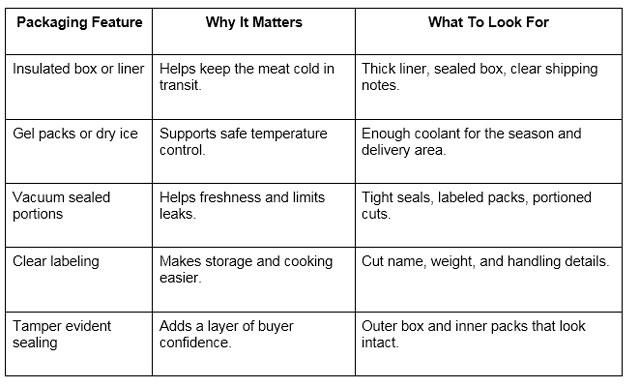
If a seller hides packaging details, ask before you buy. A good company should answer quickly and clearly.
This is also where higher quality sellers stand out. They usually explain their insulated packaging, freezing method, and what to do if the meat delivered arrives thawed or damaged.
Delivery Speed Matters More Than Fancy Branding
A sleek website is nice. Cold meat is nicer.
Always check the shipping window before you order. Meat can be packed well and still sit too long if shipping takes too many days.
You want tracking. You also want a delivery date you can plan around.
If the box lands on your porch while you are away all day, the order can turn risky fast. This is why weekday delivery is often a smarter choice than a Friday drop.
According to the FoodSafety.gov cold food safety chart, temperature control matters because perishable food can become unsafe if held too warm for too long.
That does not mean every delay ruins an order. But it does mean shipping speed and timing deserve real attention.
What To Check In Shipping Terms
- Expected delivery day.
- Carrier used for delivery.
- Tracking availability.
- Signature needs or drop off rules.
- Hot weather or holiday shipping notes.
- Delivery area limits.
- Free shipping minimums and shipping costs.
These details sound boring until your box is late in July. Then they feel very important.
Some services offer overnight or two day shipping, while others rely on slower delivery services depending on the delivery area. That difference can matter more than a promo code.
Do Not Skip The Return Policy
This part is easy to ignore because nobody likes reading policy pages. But this is where you learn how a company acts when things go sideways.
Check whether refunds are offered for late delivery, damaged packaging, wrong items, or spoiled meat. Also check how fast you need to report an issue.
Some sellers ask for photos. Some issue store credit instead of a refund.
None of that is wrong on its own. But you should know the rules before you pay.
A fair return policy usually shows confidence in the product. A hard to find policy can tell a very different story.
Take a look at return policies, frequently asked questions, and contact customer service details before placing a large order. If you cannot find a way to contact customer support fast, that is a warning sign.
Use Photos Carefully And Know What Meat Color Really Means
Photos can help, but they can also sell a fantasy. Studio lighting can make almost anything look dinner ready.
Use pictures as one clue, not the whole story. Read the details and customer reviews beside them.
Color matters too, but it is easy to misunderstand. People often think bright red always means fresher beef, but that is not the full story.
The USDA guide on meat color explains that color changes can happen for normal reasons, including exposure to air. That means a darker shade does not always signal spoilage.
Still, visible gray patches, odd slime, or a bad odor after safe delivery are red flags. If the meat looks wrong and smells wrong, trust your senses and contact the seller.
This is especially important with premium cuts like wagyu beef, filet mignon, or online steak bundles where photos can push expectations too high. A polished image should never replace basic facts about the cut, trim, and package weight.
Reviews Tell You What Product Pages Do Not
Customer reviews are one of your best tools. They can show patterns you would never spot from polished sales copy.
Look past star ratings for a minute. Read what people say about portion size, flavor, cold delivery, missing items, and customer service.
If ten reviews mention late shipments, pay attention. If several people praise how cold the box arrived, that matters too.
Try to focus on recent reviews. A company can improve, but it can also slip.
Photos from real buyers are extra helpful because they show what actually arrived. That is hard to fake well over time.
Look for positive feedback on cooking experience, packaging, and whether the cuts matched the listing. Good customer reviews often mention if the company sent cooking guides, include recipes, or solved problems fast.
You may also see names like Omaha Steaks, Porter Road, Crowd Cow, Snake River Farms, Snake River, or River Farms while comparing brands. Big names can be useful reference points, but the better move is to study the details behind the reviews.
Compare Total Cost, Not Shelf Price Alone
Online meat pricing can get sneaky. The listed cost may look good, but the full cart tells the truth.
Check the price per pound, shipping fee, minimum order, and any handling charge. Then compare that total with local options.
You should also ask what you are getting for the money. Grass-fed beef, pasture raised chicken, or hand cut steaks may cost more because the product itself is different.
Here is a quick comparison checklist.
- Price per pound.
- Shipping cost.
- Subscription discount or forced auto ship.
- Bundle savings.
- Cut size and trim quality.
- Fresh versus frozen value.
- Meat subscription and subscription options.
If you buy in bulk, online meat can be a smart value. But if the box is packed with cuts you never cook, it is not a deal. It is freezer clutter.
Some retailers offer free shipping at certain order levels, but that can push you to spend more than planned. Compare prices with your grocery store or local grocery before you assume meat delivery services always cost less.
Buy Cuts You Actually Cook
This sounds obvious, but people get pulled in by bundles all the time. A mixed box feels exciting until half of it sits untouched for six months.
Start with your real habits. What do you cook on busy weeknights, lazy Sundays, and last minute dinners?
If your family lives on ground beef, chicken breasts, and pork chops, buy those first. You can branch out later after you trust the seller.
This also helps you judge quality better. It is easier to spot a great cut when you know how that cut should look and cook.
If you love to order steaks, start with your favorite steak or favorite steak cut instead of a giant sampler. Steak lovers often do better with a smaller test order of ribeye, strip, or filet mignon before trying a curated selection of lesser known cuts.
Have A Storage Plan Before The Box Arrives
This is a big one. If your order arrives and your fridge is packed, stress hits fast.
Clear space before delivery day. Put a plan in place for what goes in the fridge, what goes in the freezer, and what gets cooked first.
The cold food storage charts at FoodSafety.gov give useful time ranges for storing meat safely in the fridge and freezer.
Label frozen packs with the cut and the date. It feels a little extra in the moment, but it saves guesswork later.
Use shallow freezer bins or group similar meats together. That way you are not digging through a frozen avalanche trying to find dinner.
Simple Storage Steps After Delivery
- Open the box right away.
- Check that the meat is still cold.
- Inspect seals and labels.
- Move items to the fridge or freezer fast.
- Cook or freeze perishable items within safe time limits.
Speed matters here because your kitchen counter is not part of the cold chain. The sooner you store everything, the better.
It also helps to think ahead about cooking method and cooking time. If you know which cuts are for grilling, roasting, or slow cooking, your freezer stays organized and the meat good for later meals does not get buried.
Know Fresh Versus Frozen Expectations
Many online meat sellers ship frozen, and that is not a bad thing. In fact, frozen shipping can protect quality well if it is handled right.
Fresh meat may work great for local or next day delivery. But frozen orders can be more practical for longer distances.
The key is clarity. The seller should tell you exactly what state the meat will arrive in.
If it arrives partially frozen but still very cold, that can still be safe. If it arrives warm, that is a very different situation.
The USDA explains more about safe thawing and handling at its food safety basics page. That page is worth saving because sooner or later every home cook needs it.
Fresh and frozen orders can both work well, but your plan matters. If you want meat delivered for a cookout this weekend, fresh may make more sense, while bulk meat orders often work better frozen.
Watch For Small Signs Of A Reliable Meat Seller
You can learn a lot from the little things. Strong sellers tend to be consistent in ways weak sellers are not.
They explain sourcing. They answer buyer questions. They spell out delivery expectations without making you hunt for them.
Here are some quiet signs that often point to a better buying experience.
- Detailed product pages.
- Clear weights and serving sizes.
- Visible customer support contact info.
- Shipping details that are easy to find.
- Storage and cooking guidance.
- Recent reviews with real delivery feedback.
- Organic labels or sourcing details when relevant.
That kind of transparency builds trust because it removes guesswork. And with online food orders, less guesswork is always a good thing.
Good sellers may also include cooking guides, suggested cooking method notes, or include recipes for less familiar cuts. Those small touches can improve the full cooking experience, especially for first time buyers.
Common Mistakes First Time Buyers Make
Almost everybody makes at least one of these mistakes on their first order. The good news is they are easy to avoid once you know them.
- Buying a large bundle from an unknown seller.
- Ignoring shipping timing.
- Skipping the refund policy.
- Missing storage prep at home.
- Choosing based on price alone.
- Assuming meat color tells the whole freshness story.
If you avoid those six problems, you are already ahead of most first time shoppers. That alone can make your first order smoother.
Another common mistake is signing up for meal delivery or subscription services without checking the subscription options first. Auto renewals, limited customization options, and higher prices can turn a good first deal into an annoying repeat charge.
How To Make Your First Order A Low Risk Win
You do not need to go big on day one. In fact, you probably should not.
Place a smaller test order first. Buy cuts you know well, track the delivery, and see how the meat arrives.
That gives you a feel for the seller without tying up a lot of money. If everything goes well, then you can try a bigger restock later.
Think of it like trying a new restaurant. You do not book the whole family reunion there before tasting the food yourself.
A smart first order might be a few burgers, chicken breasts, or one online steak box rather than a huge meat subscription. After that, use customer reviews, your own notes on flavor and packaging, and any frequently asked questions on the site to decide if the company is worth another order.