Online grocery shopping feels like a life upgrade at first. You skip the lines, dodge impulse buys, and save real time. But online grocery shopping mistakes can quietly eat up that convenience if you are not careful.
Most people do not need a complicated system. They need a simple guide that helps them avoid wasted money, missing items, and bad substitutions. That is why this list-style article works well for people searching for online grocery shopping mistakes.
Online ordering keeps growing because people like the speed and ease. Industry reporting has shown that online grocery demand stayed strong after the pandemic. More households use it every week, but many still repeat the same expensive habits.
If you shop in person often, you are not alone. Many Americans still make regular grocery trips, which means plenty of households switch between in-store and online carts during the same week. That mix creates problems because people often shop online with in-store habits.
Why Online Grocery Orders Go Wrong So Fast
Shopping on your phone feels easy. That is part of the problem. Easy clicks can turn into lazy choices.
You scroll when you are tired. You order fast between work calls. You toss random snacks into your cart because the app nudged you.
Then the order shows up. Bananas are too ripe, dinner ingredients are missing, and somehow you spent more than planned.
This is not rare. It is normal when you do not have a plan. The good news is that most online grocery shopping mistakes are easy to fix once you know where they start.
10 Online Grocery Shopping Mistakes That Cost You Money And Time
These are the mistakes that trip people up most often. Some seem small, but they stack up fast. Fixing a few of them can save money every single week.
1. Expecting Every Item To Be Picked Exactly Like You Would Pick It
This is one of the most common fears. You picture someone tossing bruised peaches and limp lettuce into your order.
Sometimes that happens, but often the result is better than people expect. Store pickers handle produce all day, and many stores let you leave notes for ripeness, size, or backup choices.
If your app has item notes, use them. Say you want firm avocados, green bananas, or the freshest carton with the latest date. Clear notes solve a lot of the produce problem.
It also helps to stay realistic. You may not get the exact apple or tomato you would have picked by hand, but you can still get good results if you give helpful instructions.
2. Turning Off Substitutions For Everything
This mistake can wreck your meal plan. You order pasta, sauce, tortillas, yogurt, and snack bars, then three key items disappear because the store ran out.
Most stores let you accept substitutions item by item. That is usually the smarter move. Allow swaps for basics, but block them for products where flavor, allergies, or nutrition matter more.
A different brand of black beans is usually fine. A random coffee creamer you dislike is not. Think in categories, not all or nothing.
If you want more tips on first-time slipups, read rookie mistakes to avoid. It covers similar patterns that cause frustration.
3. Ignoring Product Size
This one gets almost everyone. You think you ordered a family-size tub of yogurt and end up with a single cup instead.
Online carts make this easy to miss because product photos often look similar. Many shoppers click quickly and assume the picture tells the whole story.
Slow down and check ounces, counts, and package size. That quick scan saves money and prevents recipe problems later in the week.
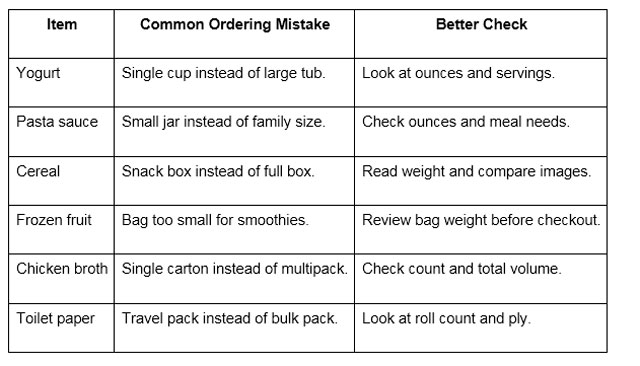
A ten-second check can stop a lot of frustration. It also keeps your price comparisons honest, because a cheap-looking item is often just a smaller package.
4. Shopping Without A List
Going in blind is one of the worst online grocery shopping mistakes because apps are built to tempt you. You open the app for eggs and leave with cookies, chips, frozen snacks, and expensive drinks.
A written list keeps you grounded. Better yet, build the list from your meals for the week first.
That means checking what you already have, picking a few dinners, and then adding breakfast, lunch, snacks, and basics. A list also helps you spot repeat buys so you do not end up with four jars of mustard or two extra bags of shredded cheese.
If you want a budgeting shortcut, the 6 to 1 grocery shopping method offers a simple structure for balanced buying. It helps online shoppers stay focused before the scrolling starts.
5. Falling For Suggested Items
Suggested items are digital impulse shelves. Their job is to get more into your cart.
You have seen the prompts. Buy again. People also bought. Limited-time deal. You might also like this.
Some suggestions are useful, especially if they remind you about a staple you forgot. Most of the time, though, they push you away from your plan.
Treat them like the candy near the checkout lane. Skip past them unless the item was already on your list.
6. Guessing Produce Weight
Produce ordering can get weird fast. You know you need eight bananas, but the site wants pounds.
You need potatoes for soup, but the listing only shows bag weights. Then a recipe calls for cups of chopped broccoli, which tells you almost nothing about how much to buy.
This gets easier once you build your own cheat sheet. After a few orders, you start to learn what one pound of apples looks like, how many onions your household uses in a week, and how much fruit your kids really eat.
Make a short note in your phone and update it as you shop. Over time, this one habit cuts waste, reduces spoilage, and makes your cart more accurate.
Here is a simple example to keep in mind:
- 1 pound of bananas is usually 3 to 4 medium bananas.
- 1 pound of carrots is often a full side dish for 4 people.
- 3 medium potatoes usually make a small batch of soup.
- 1 onion per recipe is common for weeknight meals.
7. Missing Store Deals And Digital Coupons
Some people assume online shopping always costs more because they miss the weekly specials. But many stores post sales, rewards, and digital coupons right in the app.
Before you check out, look at the sale section and clip the offers that fit your list. Build part of your meal plan around what is marked down instead of deciding everything in advance.
This matters even more when food prices are tight. A good online order should reduce stress, not create more budget pressure.
It also helps to compare unit prices. A sale is not always a bargain if the smaller package still costs more per ounce.
8. Waiting Until You Have No Food Left
This mistake is common because life gets busy. You remember to order groceries when your fridge looks empty and dinner is already a problem.
Then every pickup slot is gone until tomorrow, or the next day. Now you are spending extra on takeout because your timing was off.
Try placing your order one to three days earlier than you think you need it. That gives you better time slots, more product availability, and less stress during the week.
It also gives you time to compare stores if one app is missing key items. A little buffer helps you avoid rush choices and overpriced backup meals.
People who already dislike grocery shopping sometimes use meal kits for part of the week because it cuts last-minute pressure. That is not for everyone, but it can help during very busy seasons.
9. Forgetting Food Safety After Delivery
This is a big one, especially in hot weather. If groceries sit outside too long, your savings do not matter much.
Perishable food needs attention right away. Guidance shared by Martha Stewart notes that hot food should stay at 135 degrees Fahrenheit or warmer, while cold food should stay below 41 degrees.
If delivery arrives while you are away, check whether the service uses insulated bags, cold packs, and clear drop-off timing. If the service is unreliable, pickup may be the safer option.
Also inspect meat, dairy, frozen items, and deli foods as soon as they arrive. If something feels warm, thawed, or damaged, report it right away through the app.
10. Ignoring Privacy And Account Security
Convenience can make people careless. They save cards, reuse passwords, and never think twice.
But online grocery accounts hold addresses, payment details, and shopping habits. That makes them worth protecting.
A reported case involving an grocery store security breach is a reminder that basic account safety matters. Use a strong password, turn on alerts if available, and review your payment settings now and then.
If more than one person in your household uses the account, keep the login details organized. Shared access can create confusion, duplicate orders, and accidental purchases if nobody is tracking the cart.
Simple Habits That Make Online Grocery Shopping Much Easier
You do not need to become a perfect planner. You just need a routine that is easy to repeat.
- Check your fridge, freezer, and pantry first.
- Pick four to six dinners for the week.
- Build your list from those meals.
- Review sale items before checkout.
- Add notes for produce and meat.
- Choose substitutions with care.
- Book pickup or delivery early.
That is it. Simple beats fancy almost every time. The goal is to make fewer avoidable mistakes, not to turn grocery shopping into a part-time job.
What Smart Shoppers Pay Attention To
Smart online shoppers do not just buy food. They watch patterns.
They notice which store sends better produce. They remember which app pushes too many extras. They learn when delivery windows disappear and when markdowns usually show up.
They also keep an eye on what gets refunded, what arrives damaged, and which substitutions actually work. That information helps them make better choices the next time.
That kind of awareness turns random ordering into a repeatable system. And systems save money.
If you follow grocery trends, you can see how serious retailers are about this category. Reporting on online grocery expansion through JioMart shows how competitive this space has become.
Some Shopping Mistakes Show Up In Every Store
The store changes, but the habits stay the same. People overspend, shop hungry, ignore labels, and forget their budget.
You can see that pattern in advice about Trader Joe's shopping mistakes, Aldi shopping mistakes, and other store-specific guides. Different stores, same human behavior.
That is actually good news. If you fix the habit, you improve almost every grocery trip, online or offline.
For example, shoppers who skip size checks will make the same mistake at almost any store. Shoppers who buy without a list will keep overspending whether they use pickup, delivery, or a cart in the aisle.
What If You Run An Online Grocery Business
If you are on the business side, customer mistakes can show you where the buying flow is weak. Bad filters, confusing weights, poor substitution settings, and weak pickup communication all create avoidable problems.
Retailers can reduce abandoned carts and complaints by making pack sizes clearer, adding better item notes, and giving customers more control over substitutions. A smoother checkout flow also lowers support issues after delivery.
Teams building or improving that kind of operation may benefit from an online grocery store marketing plan template. A better customer experience starts long before the order gets packed.
Even Grocery Shopping In Pop Culture Tells A Story
It is funny how normal grocery shopping has become as a public interest topic. Even celebrity snapshots like Seraphina Affleck and Jennifer Garner grocery shopping get attention because food shopping is one of those everyday tasks everyone recognizes.
That is part of why people care so much about getting it right. Grocery shopping sounds small, but it affects your time, money, health, and stress every single week.
When online orders go badly, it feels personal because meals, routines, and family schedules all get thrown off. When they go well, they quietly make life easier.
In Summary
The best fix for online grocery shopping mistakes is not doing more. It is paying attention to a few simple details before you tap buy.
Check sizes, plan meals, use item notes, book early, compare prices, and stop treating online carts like entertainment. Those small moves cut waste and make the whole process easier.
Once you clean up these online grocery shopping mistakes, grocery delivery or pickup starts working the way you hoped it would. You spend less, waste less, and end the week with fewer surprises.