Daijiworld Media Network – Mangaluru
Mangaluru, Apr 6: The union ministry of environment, forest and climate change has approved Karnataka’s Coastal Zone Management Plan based on the recommendation of the National Coastal Zone Management Authority. While this move is seen as a boost for tourism development, confusion and regulatory hurdles continue to persist.
Tourism development in coastal Karnataka is expected to generate direct and indirect employment, create income opportunities for locals, and contribute to socio-economic growth. However, CRZ (Coastal Regulation Zone) rules continue to pose significant challenges for establishing any new ventures.
Applications seeking CRZ clearance are being considered under the 2019 notification. As per the Coastal Zone Management Plan maps prepared for Karnataka, the public can obtain approvals from the Karnataka State Coastal Zone Management Authority or the tourism department. However, only conditional permissions are being granted.
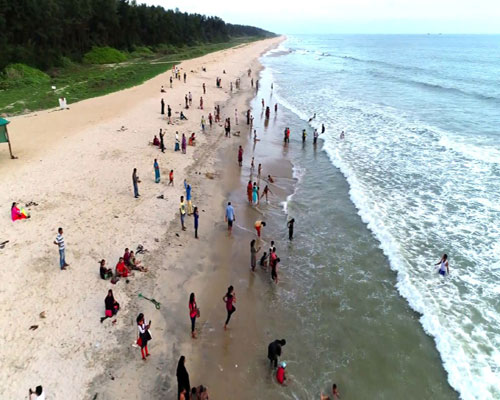
A total of 92 beaches across Uttara Kannada, Udupi, and Dakshina Kannada districts have been identified for tourism development. By incorporating tourism projects into the approved Coastal Zone Master Plan, these beaches can be developed as major tourist destinations.
The CRZ areas have been classified into CRZ-1A, CRZ-1B, CRZ-2, and CRZ-3 categories. Development activities are permitted strictly as per the guidelines of the Coastal Zone Management Authority. Permissible activities include hotels, resorts, jetties, shacks, water sports, adventure sports, and related tourism infrastructure.
In CRZ-1A zones, only activities such as mangrove walkways, wooden huts, and natural pathway construction are allowed. In CRZ-2 areas, beach resorts and hotels are permitted only in specifically earmarked tourism development zones as per Annexure-3 guidelines. However, identifying such designated areas itself has proven to be difficult.
Temporary tourism facilities along beaches — such as huts, toilets, changing rooms, shower panels, interlocking paver block walkways, drinking water facilities, and seating arrangements — are permitted only in approved areas and must be located at least 10 metres away from the high tide line. Similar restrictions apply to most activities in CRZ-3 zones.
All beaches in the state’s coastal region have been mapped by the tourism department, specifying permissible activities and the designated area extent for each. For activities under CRZ-1A, 1B, 4A, and 4B categories, clearance must be obtained from the central government, while for CRZ-2 and CRZ-3 categories, a no-objection certificate must be secured online from the Karnataka Coastal Zone Management Authority.
CRZ officials state that guidelines have been framed under the 2019 notification for coastal tourism development. Only approved activities in specified locations can be undertaken with due permission from state and central authorities. Violations will invite notices and action.
However, tourism promoter Yatheesh Baikampady pointed out that though guidelines were issued in 2019, there remains a lack of clarity among stakeholders. “A review was due in 2024 and a new notification was expected. We are now in 2026. New rules must be framed at the earliest, or several investments and projects may slip away,” he said.