Daijiworld Media Network - New Delhi
New Delhi, Apr 7: Supreme Court judge BV Nagarathna on Tuesday observed that a woman cannot be treated as “untouchable” for three days a month and then cease to be so on the fourth day, while hearing petitions related to restrictions on women at religious places, including the Sabarimala Temple.
The remarks came during proceedings before a nine-judge Constitution bench led by Chief Justice Surya Kant, examining issues around religious freedom and gender equality across faiths.
Referring to menstruation, Justice Nagarathna questioned the applicability of Article 17 — which abolishes untouchability — in the context of the Sabarimala case. “Speaking as a woman, there can't be a three-day untouchability every month, and on the fourth day, there is no untouchability,” she observed.
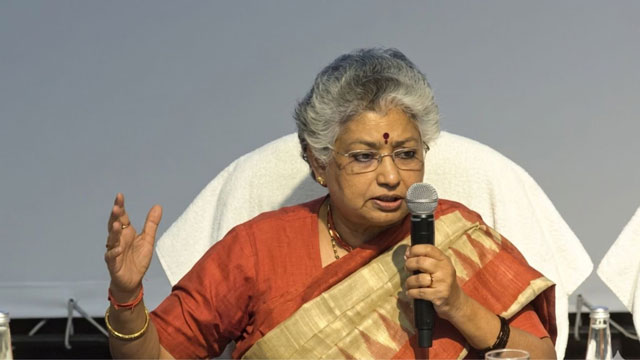
She noted that Article 17 was introduced as a fundamental right in the historical context of caste-based untouchability, and expressed doubt over its interpretation in the present case.
The remarks followed submissions by Solicitor General Tushar Mehta, who objected to aspects of the 2018 Sabarimala verdict that equated the exclusion of women aged 10-50 years with untouchability.
In the earlier judgment, Justice D Y Chandrachud had held that barring women based on age and menstrual status amounted to a form of untouchability and placed them in a subordinate position, perpetuating patriarchy.
Mehta, however, argued that the restriction at Sabarimala is specific to a particular age group and not linked to menstruation. “Sabarimala concerns only a particular age group… Lord Ayyappa temples elsewhere are open to women of all ages. This is a unique case,” he submitted.
The court is currently hearing a batch of petitions examining the broader constitutional questions surrounding religious practices, equality, and women’s rights. Further hearings are expected as the bench deliberates on the complex legal and social issues involved.