Daijiworld Media Network - Mumbai
Mumbai, May 26: Renowned Indian archaeologist and Indus Valley civilisation scholar Shereen Ratnagar passed away in Mumbai after a brief illness, family sources said. She was 82.
Ratnagar, widely regarded as one of India’s most distinguished archaeologists, was closely associated with research on the Harappan civilisation, particularly its trade networks, urban organisation, and socio-economic structure.
Born in Mumbai in 1944, she studied at Deccan College, Pune, and later trained at the Institute of Archaeology, University College London, where she specialised in Mesopotamian archaeology. She went on to serve as a professor at Jawaharlal Nehru University’s Centre for Historical Studies in New Delhi.
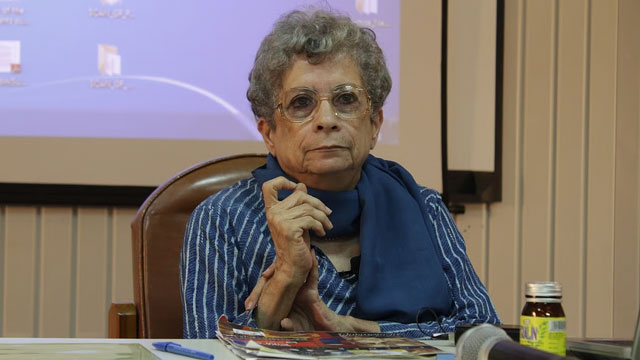
After retiring in 2000, she continued independent research from Mumbai, contributing extensively to academic literature on the Indus Valley civilisation.
Her notable works include Encounters: The Westerly Trade of the Harappa Civilization (1981), which documented evidence of Harappan trade links with Mesopotamia, and Understanding Harappa: Civilization of the Indus (2001), which provided an in-depth analysis of Harappan economy and urban systems.
Ratnagar was known for challenging conventional interpretations in archaeology and offering alternative readings of artefacts and excavation findings, including debates around Mohenjo-daro findings and ancient urban structures.
She also conducted fieldwork in Iraq and worked with the British School of Archaeology, later completing her PhD on Indus–Mesopotamian interactions during her time at JNU under historian Romila Thapar.
In later years, she also appeared as an expert witness in legal proceedings related to the Ayodhya dispute, where she questioned interpretations of archaeological findings presented by the Archaeological Survey of India.
Throughout her career, Ratnagar published widely on ancient economies, urbanism, pastoral societies, and early state formation, and remained an influential voice in debates on the political interpretation of archaeology.
Her death marks the end of a significant chapter in Indian archaeological scholarship.