Daijiworld Media Network – New Delhi
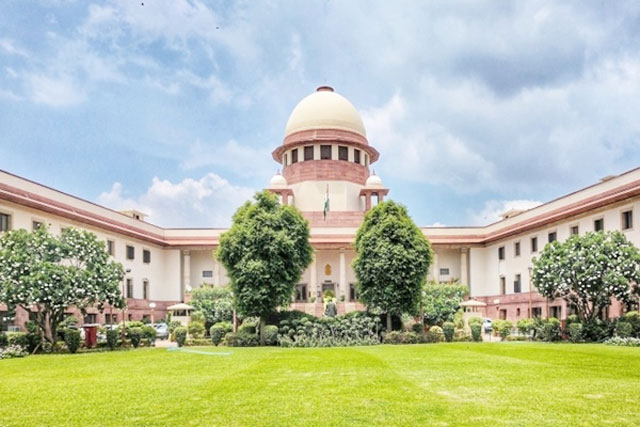
New Delhi, May 27: The Supreme Court is expected to pronounce its verdict on Wednesday on a series of petitions challenging the legality of the Special Intensive Revision (SIR) of electoral rolls conducted by the Election Commission of India (ECI).
The judgment will be delivered by a bench comprising Chief Justice of India Surya Kant and Justice Joymalya Bagchi, which had reserved its decision earlier this year after extensive hearings.
The petitions questioned the constitutional validity of the SIR exercise, arguing that the Election Commission had exceeded the powers granted under Article 326 of the Constitution, the Representation of the People Act, 1950, and the rules framed under it.
The controversy mainly revolves around the ECI’s requirement that voters whose names were not included in the 2002 electoral rolls, or the 2003 rolls in some states, must establish ancestral linkage to individuals whose names appeared in those records.
Petitioners argued that the requirement could lead to the exclusion of genuine voters, particularly migrant workers, economically weaker sections and marginalised communities who may not possess documentary evidence linking them to older electoral records.
During the hearings, the apex court issued interim directions aimed at ensuring greater transparency and minimising inconvenience to voters affected by the revision process in various states and union territories.
The Election Commission had initially prescribed 11 documents for verification under the SIR process. However, the Supreme Court later directed that Aadhaar should also be accepted as a supporting document.
Most of the petitions were filed in June last year after the Election Commission launched the Special Intensive Revision exercise in Bihar. The revision drive was later extended to several other states and union territories, including West Bengal, Kerala and Tamil Nadu.
Defending its decision, the Election Commission told the court that the revision exercise was necessary to maintain the purity of electoral rolls and to eliminate duplicate or ineligible entries.
Following detailed arguments from all parties, the bench headed by Chief Justice Surya Kant had reserved its verdict on January 29.