Daijiworld Media Network – Mumbai
Mumbai, Jun 26: Morning suburban train services on Mumbai's Western Railway network were severely disrupted on Friday following multiple technical failures, leaving thousands of commuters stranded during peak office hours and triggering widespread criticism over the lack of timely communication from railway authorities.
The disruption began after an overhead equipment (OHE) fault between Dadar and Churchgate affected train operations from around 6 am to 7.22 am. Soon after the issue was rectified, a point failure at Churchgate station around 8 am caused further delays, disrupting the morning schedule and affecting services across the Western suburban corridor.
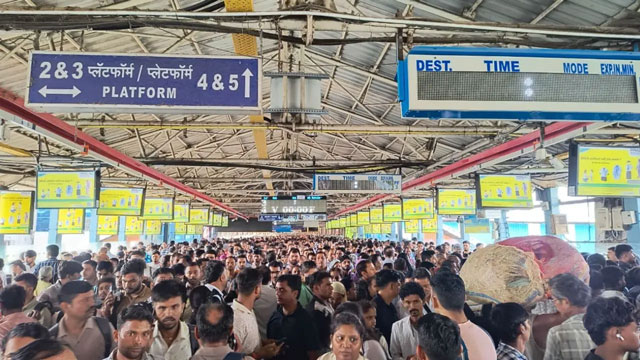
Railway officials later confirmed that both technical faults had been resolved and train services were being gradually restored.
Despite the restoration, commuters expressed anger over what they described as inadequate communication during the disruption. Many alleged that Western Railway failed to issue timely updates through its official social media platforms or other passenger information channels, leaving travellers unaware of the cause and expected duration of the delays.
Several passengers said they only realised the extent of the disruption after reaching overcrowded stations or finding trains halted between stations.
Commuters also criticised the absence of announcements inside trains and at railway stations, saying passengers were left to figure out the situation on their own.
The communication gap added to the confusion, with many office-goers and students unsure whether to wait for delayed trains, seek alternative transport or postpone their journeys.
The disruption affected one of the busiest commuting periods of the day, causing inconvenience to thousands of passengers travelling on the Western Railway network.
With normal operations gradually resuming, commuters have urged railway authorities to improve real-time passenger information systems, strengthen public announcement mechanisms and provide prompt updates through official digital platforms during operational emergencies.