Daijiworld Media Network – Mumbai
Mumbai, Jun 27: Maharashtra is turning to Artificial Intelligence (AI) to study and decode thousands of prehistoric petroglyphs spread across the Konkan region, in a move aimed at strengthening India’s bid for UNESCO World Heritage status for the ancient sites.
The state government has allocated Rs 15 crore for the four-year project, under which the petroglyphs will be scientifically analysed, classified and documented to understand their origin, cultural significance and historical context.
The petroglyphs are ancient stone carvings of animals and human-like figures found on laterite plateaus across Ratnagiri and Sindhudurg districts of coastal Maharashtra. The carvings include figures of turtles, elephants, peacocks and rhinoceroses and were documented during expeditions and excavations conducted between 2017 and 2023.
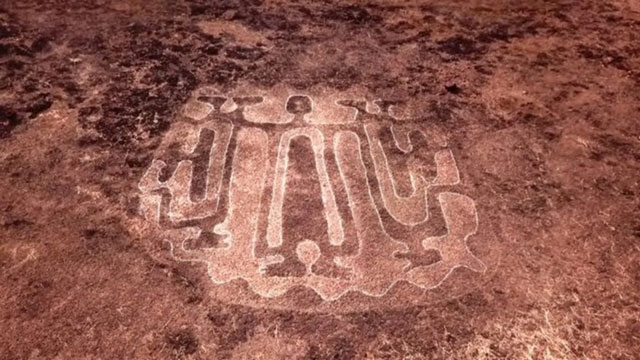
Archaeologists estimate that these carvings date back between 20,000 BC and 10,000 BC, making them older than the Harappan civilisation. The carvings, some of which cover around 50 square metres by 20 square metres, are spread across nearly 150 square kilometres covering 107 villages in the Konkan region.
Tejas Garge, Director of the Directorate of Archaeology and Museums, Maharashtra, said the petroglyphs represent some of the earliest evidence of human artistic expression in India.
“These carvings show the cognitive ability of early humans to observe nature and recreate it through art,” Garge said.
The Maharashtra government has appointed IIT Pravartak, the technology innovation hub of IIT Madras, to conduct digital assessment and documentation of the sites.
Experts said the absence of horse and bull figures among the carvings provides important clues about their age. While horses arrived in the Indian subcontinent much later and bulls became common after agriculture began, their absence suggests that the carvings may belong to the Mesolithic or Middle Stone Age period.
AI-powered archaeological study
The petroglyphs were first identified in 2007 by a group from Ratnagiri led by local resident Sudhir Risbud. Through the non-profit organisation Nisarga Yatri, Risbud later secured support from the Department of Science and Technology for documentation efforts.
Surveys across more than 150 villages found petroglyphs in 107 villages, with around 3,000 carvings identified so far.
Due to their large size, experts said manual documentation is difficult and requires advanced drone technology.
As part of the new project, high-resolution aerial images will be captured using drones and analysed through AI systems. The technology will help identify patterns, reconstruct damaged sections and study similarities with ancient carvings found in other civilisations around the world.
IITM Pravartak CEO Shankar Raman said the study will also examine the cultural origins of the carvings, the tools used to create them and the possible meaning behind each figure.
Since conventional carbon dating is difficult due to the coastal location, heavy rainfall and erosion of rock surfaces, researchers will explore alternative scientific methods.
The team will also compare the carvings with local tribal traditions, folklore and food practices to understand the lifestyle, environment and biodiversity of the prehistoric period.
Path towards UNESCO recognition
The petroglyphs were added to India’s tentative list of UNESCO World Heritage sites in 2025. However, permanent World Heritage status is yet to be granted.
For UNESCO recognition, detailed documentation is required covering archaeological importance, conservation measures, global comparisons, legal protection, management plans and tourism strategies.
Garge said the IIT Madras study will help prepare the required dossier for the final nomination.
“The Archaeological Survey of India’s slots for UNESCO nominations are booked until 2028-29. We are targeting 2030, and the timeline of this study matches that goal,” he said.
The project is expected to place Maharashtra’s prehistoric heritage on the global stage while combining modern technology with archaeological research.