Daijiworld Media Network - California
California, Jul 8: Scientists have reported a major advance in the quest for an effective HIV vaccine, demonstrating that an experimental vaccine strategy successfully triggered broadly neutralising antibodies (bnAbs) in nonhuman primates, raising hopes for future protection against the virus.
The findings, published in the journal Nature, come from a collaborative study led by researchers at the La Jolla Institute for Immunology (LJI) and Scripps Research.
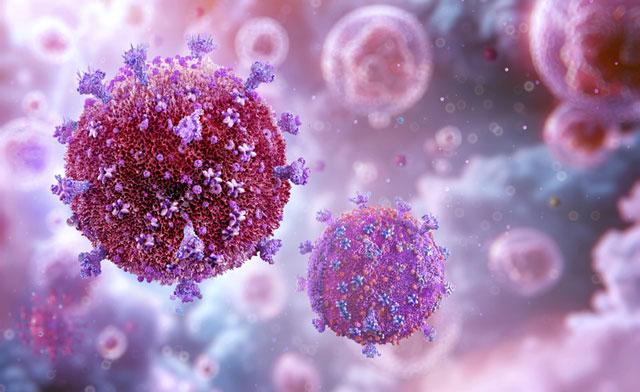
HIV has long resisted conventional vaccine approaches because of its rapid mutation rate, extensive antigenic diversity and protective glycan shield, which make it difficult for the immune system to recognise and neutralise the virus.
While a small number of people living with HIV naturally develop broadly neutralising antibodies capable of targeting conserved regions of the virus, scientists have struggled to reproduce this response through vaccination.
The researchers used a strategy known as germline targeting, designed to activate rare precursor B cells that have the potential to evolve into cells capable of producing broadly neutralising antibodies.
To test the approach, the team engineered protein immunogens that mimic key structures of the HIV envelope. Rhesus macaques were first given a priming immunogen to activate naïve B cells, followed by a series of booster doses intended to guide those cells through the maturation process required to produce bnAbs.
"This series of vaccinations will guide, or 'walk', a B cell from its naïve state to its broadly neutralising state," said co-first author Patrick Madden of the La Jolla Institute for Immunology.
The study found that bnAb-class memory B cells developed in at least half of the vaccinated animals, while 44 per cent produced measurable broadly neutralising antibody activity in their blood.
In the strongest responder, antibody levels reached concentrations that researchers said could potentially provide protection against a wide range of HIV variants.
The vaccine's priming immunogen has already undergone evaluation in the HVTN 144 clinical trial and is currently being tested in the Phase I IAVI G004 trial involving human participants.
Researchers said the findings provide important proof of concept that germline-targeting vaccines can reliably generate the desired class of antibodies under natural biological conditions, although further work is needed to improve booster regimens, increase response rates and confirm protection in humans.
The team believes the results represent a significant step towards developing an effective HIV vaccine after decades of unsuccessful attempts.