Daijiworld Media Network - New Delhi
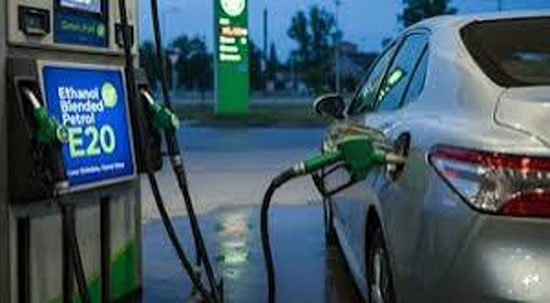
New Delhi, Jul 14: India's nationwide rollout of E20 petrol is in line with a growing international movement towards cleaner transport fuels, as countries across the world increasingly adopt higher ethanol-blended petrol to cut carbon emissions, enhance energy security and reduce dependence on imported fossil fuels.
The introduction of petrol containing 20 per cent ethanol has generated discussion in India over issues such as vehicle compatibility and long-term impact. However, global trends show that ethanol blending has become a central element of clean energy policies, with several nations either already using higher blends or setting ambitious targets for the coming years.
According to the Global Bioethanol Blending Policies Map, governments worldwide are expanding the use of ethanol-mixed petrol to reduce greenhouse gas emissions, curb fossil fuel consumption and strengthen domestic fuel supplies. Although blending requirements differ from country to country, the overall trajectory is towards greater use of bioethanol.
India has already made E20 fuel available across the country and is now aiming to introduce E30 petrol by 2030, placing it among the world's leading nations in ethanol blending.
Brazil continues to lead globally in the use of ethanol-based transport fuel. The country uses E30 as its standard petrol blend and also supports E100, or pure ethanol, for flex-fuel vehicles. Paraguay has also adopted E30, while Bolivia plans to move to E25.
In North America, E10 and E15 fuels are commonly sold in the United States. Canada follows a mixed approach, with a nationwide E5 requirement supplemented by higher blending mandates in several provinces, including E11 in Ontario, E12 in Quebec, E10 in Manitoba and E7.5 in Saskatchewan.
Europe has also embraced ethanol-blended fuels, with 19 European Union member states using E10. The United Kingdom has introduced E10 nationwide, while Finland intends to increase its ethanol blend to E22.5 by 2027.
Several Latin American countries have adopted similar policies. Argentina uses E12, while Uruguay, Colombia and Ecuador have standardised E10. Peru markets E7.8, and Costa Rica and Panama are targeting E10 by 2027. Guatemala is expected to implement E10 by 2026.
Across Asia, Nepal and the Philippines have adopted E10 fuel. Thailand has made E10 mandatory while also offering E20 and E85 options. Vietnam supplies E10 for RON95 petrol and E5 for RON92, whereas Indonesia permits E3 in imported petrol.
Japan has laid out a phased roadmap to increase ethanol use, targeting E10 by 2030 and E20 by 2040 as part of its long-term clean energy strategy.
African nations are also expanding ethanol blending. Zimbabwe has adopted E20, while Nigeria, Angola, Malawi and Mozambique use E10. South Africa currently follows E2 standards, whereas Uganda plans to introduce both E5 and E20 by 2030. Egypt is also preparing to launch E5 fuel within the same period.
Elsewhere, Australia's New South Wales follows E6 blending standards, Queensland uses E4, Iraq has adopted E10, and Türkiye has implemented E3, reflecting the broad global transition towards cleaner, ethanol-based transport fuels.