Daijiworld Media Network – Kudremukh
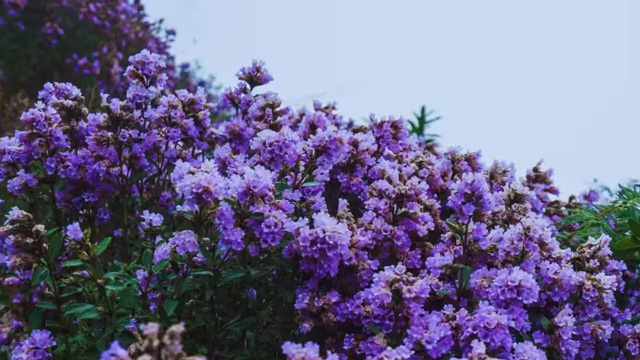
Kudremukh (Chikkamagaluru district), Sep 27: The mist-shrouded hills of Kudremukh are witnessing an unusual natural spectacle, with the rare Neelakurinji (Strobilanthes kunthiana) flowers bursting into bloom — four years ahead of their expected flowering cycle.
The striking blue flowers have been drawing the attention of nature lovers after appearing across the shola grasslands of Gangadikal, Chittegudda and the Kudremukh mountain region within the Kudremukh National Park.
Neelakurinji generally blooms en masse once every 12 years. A mass flowering was recorded in the region in 2018, leading to expectations of the next major bloom in 2030. The appearance of the flowers in 2026, therefore, has come as a surprise and sparked considerable curiosity.
Is climate change behind the early flowering?
While the early bloom has raised questions about possible environmental changes, its exact scientific cause has not yet been established.
Changes in temperature, rainfall and soil moisture associated with global climate change could potentially influence plant growth and flowering patterns. However, there is currently no scientific evidence to establish that climate change is directly responsible for the early Neelakurinji bloom in Kudremukh.
Differences in local environmental conditions and variations in the plant's growth cycle could also be responsible. Botanists and environmental experts will need to conduct further studies to establish what triggered the unusual flowering.
Important food source for pollinators
Neelakurinji plants spend several years growing and storing energy before flowering. Once they bloom and produce seeds, they complete their life cycle.
During the flowering season, the flowers become an important source of food and pollen for several pollinating species, including bees and butterflies.
The rare plant is found in parts of the shola forests of Karnataka, Kerala and Tamil Nadu and forms an important part of the fragile ecosystem of Kudremukh.
Forest department urges tourists not to pluck flowers
Kudremukh Wildlife Division DCF Ruthren has urged visitors to admire the rare blooms without disturbing them and to refrain from touching, plucking or damaging Neelakurinji or any other plants.
“Tourists should enjoy the beauty of the rare Neelakurinji flowers. However, touching, plucking or damaging the flowers and plants must be completely avoided. Everyone should co-operate in protecting the plant's habitat. The area is being continuously monitored, and violations of the rules will not be allowed,” he said.
The unexpected flowering has turned portions of Kudremukh's shola grasslands into a seasonal attraction for nature enthusiasts. At the same time, the early bloom has highlighted the need for closer scientific study and continued protection of the fragile habitat that sustains the rare species.