Daijiworld Media Network - Raipur/Dhamtari
Raipur/Dhamtari, Jan 23: In a major setback to the Maoist insurgency in Chhattisgarh, nine active Naxalites, including several senior functionaries, surrendered before the police in Dhamtari district on Friday, officials said.
The surrender, described as one of the largest simultaneous capitulations in recent years, took place at the Dhamtari police headquarters in the presence of Inspector General of Police (Bastar Range) Amresh Mishra and Dhamtari Superintendent of Police Suraj Singh Parihar. Authorities believe the development could yield critical intelligence on Maoist networks operating in the region.
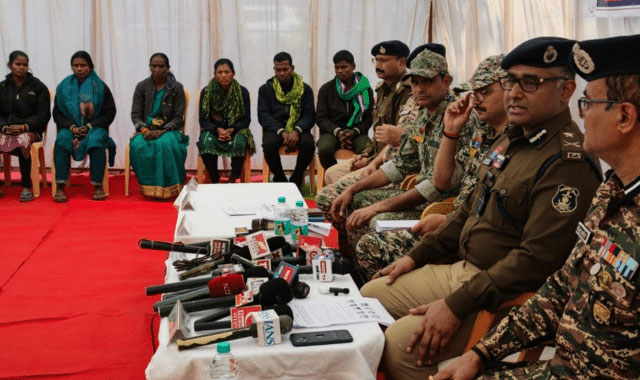
Police sources said the surrendered cadre comprised four men and five women, all holding key positions within the banned CPI (Maoist) organisation. Among them were a Divisional Committee Member (DVCM), an Area Committee Member (ACM), and multiple area commanders. The group had been active mainly in the Sitanadi forest region, a long-time Maoist bastion.
The former insurgents also handed over a cache of weapons, including a .303 rifle and other arms, to security personnel. Several of those who surrendered were carrying bounties worth lakhs of rupees and were wanted in connection with numerous violent incidents involving attacks on security forces and civilians.
The surrender comes amid an intensified anti-Naxal campaign across Chhattisgarh, particularly in the Bastar division, where recent months have seen a string of encounters, arrests, and voluntary surrenders. Officials credit sustained operational pressure by security forces, coupled with the state’s rehabilitation and surrender policies, for weakening Maoist morale.
Authorities believe the surrendered cadres’ disclosures could help uncover remaining hideouts, logistics routes, and future plans of the insurgent groups still active in the area. The state government has reiterated its resolve to eliminate Left-wing extremism through a dual approach combining security action and development initiatives aimed at winning the trust of tribal communities.
The surrender is being viewed as a significant erosion of Maoist influence in the Sitanadi belt, where the group had maintained a strong presence for years.