Daijiworld Media Network - Bengaluru
Bengaluru, Feb 1: Karnataka governor Thawarchand Gehlot has declined to give assent to the state government’s proposed Hate Speech Bill, expressing concern that while hate speech is harmful to society, curbing it in the name of law should not result in the erosion of citizens’ fundamental rights. The Bill has now been reserved for the consideration of the President.
Sources said the governor took the decision after examining the Bill’s constitutional validity, legislative competence and its potential impact on freedom of speech and expression. In a letter to the state government, the governor invoked his powers under Articles 200, 201 and 254 of the Constitution.
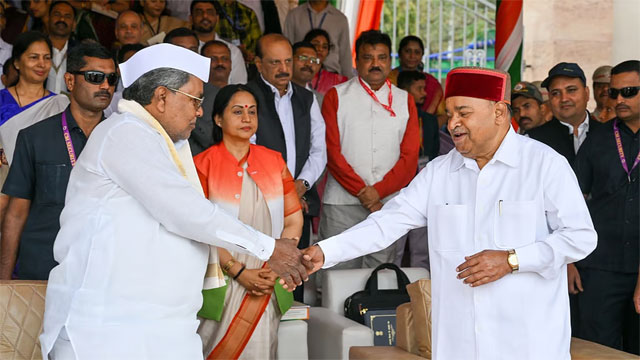
While acknowledging that hate speech poses a serious social challenge, the governor observed that suppressive laws are not the appropriate response and that education, culture and public awareness are more effective tools to counter hatred. He cautioned that measures taken to address hate speech must not infringe upon constitutionally guaranteed freedoms.
The Bill was passed during the winter session of the legislature held in Belagavi in December. It seeks to bring under the ambit of hate crime any speech or act that promotes hatred on the basis of religion, race, language, place of birth, caste or gender, and includes provocation intended to cause emotional, mental, physical, social or economic harm. The proposed law also places restrictions on promoting or propagating hate through any medium.
The state government has maintained that the Bill does not target any particular political party or community and is aimed at preserving social harmony and preventing the spread of hatred. It has stated that the law would apply irrespective of which party is in power and has urged political leaders, organisational heads and individuals to exercise caution while speaking on public platforms and social media.
However, the governor pointed out that several definitions in the Bill are vague and could adversely affect freedom of expression. He noted that the proposed legislation may have implications for constitutional guarantees, including equality before law under Article 14, freedom of speech and expression under Article 19(1)(a), and the right to life and personal liberty under Article 21. He also referred to possible conflicts with existing central laws, issues of legislative competence and concerns relating to the federal balance between the Centre and the states.
The governor further expressed serious concern over the stringent punishments proposed under the Bill, including imprisonment of up to seven years for a first offence and up to ten years for repeat offences, along with non-bailable provisions. Such harsh penalties, he warned, could render the law oppressive in nature.
More than 40 representations opposing the Bill were reportedly submitted to Raj Bhavan, with objections raised by members of civil society, media organisations, digital rights groups and constitutional experts. Critics have argued that the Bill was passed without adequate consultation with stakeholders.
Observing that Karnataka has a rich legacy of intellectual and cultural movements, the governor said the proposed law could have an adverse impact on this tradition. He underlined that in a democratic system, freedom of expression is a collective societal right and protecting it is of paramount importance.