Daijiworld Media Network - Islamabad
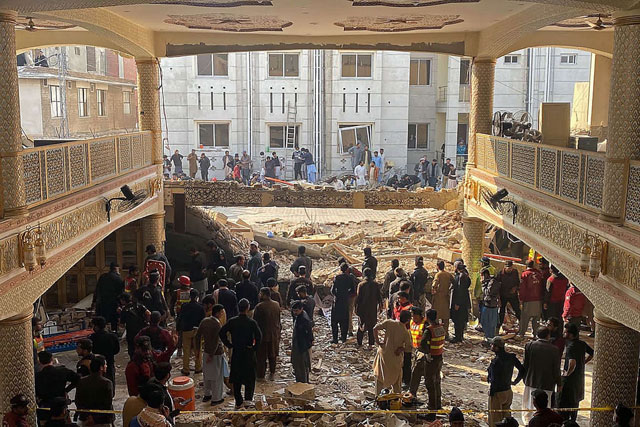
Islamabad, Feb 7: Pakistan’s capital was rocked by a devastating suicide bombing on Friday after an attacker blew himself up inside a crowded mosque, killing at least 69 people and injuring more than 170 others in one of the deadliest attacks in recent years.
As shock and grief spread across the country, the tragedy quickly triggered a diplomatic row, with India and Afghanistan firmly rejecting allegations from Islamabad and instead pointing to Pakistan’s own security lapses and internal challenges.
In a strongly worded statement, India’s Ministry of External Affairs condemned the attack and expressed condolences to the families of the victims. However, it categorically dismissed any suggestion of Indian involvement, calling such claims “baseless and pointless.”
“It is unfortunate that, instead of seriously addressing the problems plaguing its social fabric, Pakistan chooses to delude itself by blaming others for its home-grown ills,” the statement said.
India’s response followed remarks by Pakistan’s Defence Minister Khawaja Muhammad Asif, who alleged that the suicide bomber had links to Afghanistan and claimed an emerging nexus between India and the Afghan Taliban. In a post on X, Asif accused India of waging a proxy campaign against Pakistan.
The allegations were swiftly rejected by Afghanistan’s Taliban-led government. In a statement, the Afghan Ministry of National Defence condemned the Islamabad attack and termed Pakistan’s accusations “irresponsible,” saying they were made without evidence or proper investigation.
The Afghan side said Pakistan has repeatedly blamed Kabul for attacks in Balochistan and other regions without verification, calling such claims illogical and an attempt to divert attention from its own security failures. It also questioned how Pakistani authorities could identify perpetrators so quickly after attacks but fail to prevent them beforehand.
Reiterating its stance, the Taliban government said it does not permit the killing of innocents and does not support or shelter those involved in such violence. It urged Pakistan to stop evading responsibility and instead improve internal security while pursuing constructive engagement with neighbours.
Inside Pakistan, the blast has intensified concerns over the country’s fragile security situation, even in areas once considered relatively secure. Officials said the attacker detonated explosives inside the mosque after being challenged by security personnel, causing heavy casualties among worshippers. Hospitals in Islamabad remained overwhelmed as doctors struggled to treat the injured.
Analysts noted that the episode underscores Pakistan’s growing diplomatic isolation on militancy-related issues, with both India and Afghanistan pushing back strongly against accusations and urging Islamabad to confront militant networks within its own borders.