Daijiworld Media Network – New Delhi
New Delhi, Feb 20: In an extraordinary directive, the Supreme Court of India on Friday ordered the deployment of serving and former district judges to assist the Election Commission of India (EC) in the ongoing special intensive revision (SIR) of electoral rolls in West Bengal.
Expressing concern over what it termed an “unfortunate blame game” between the poll panel and the TMC-led state government, a bench headed by Chief Justice Surya Kant, along with Justices Joymalya Bagchi and Vipul M Pancholi, issued a series of directions to ensure timely completion of the revision exercise.
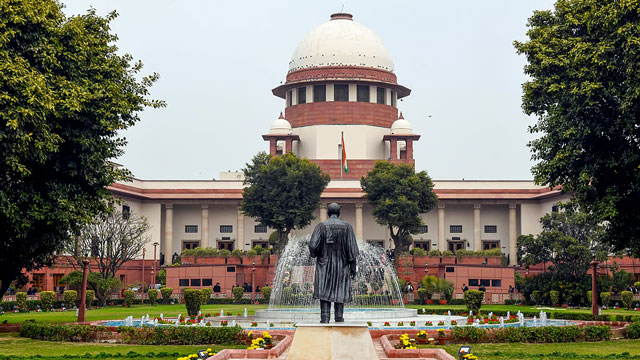
The apex court ordered deputation of judicial officers to adjudicate claims and objections of voters placed under the “logical discrepancy list”. It directed the Chief Justice of the Calcutta High Court to spare serving judicial officers and also identify former judges to assist in the SIR process. The court took serious note of the state government’s failure to make available an adequate number of Grade ‘A’ officers for the exercise.
The bench permitted the Election Commission to publish the draft electoral roll by February 28 and allowed the issuance of supplementary lists thereafter, if required.
Further, the court directed district collectors and superintendents of police across the state to provide logistical support and security to the deputed judicial officers. It clarified that orders passed by these judicial officers during the revision process would be deemed as orders of the court.
The judicial officers will be assisted by micro-observers and state government officials to facilitate the SIR work.
The top court also instructed the Chief Justice of the Calcutta High Court to convene a meeting of all stakeholders, including the Chief Secretary, Director General of Police and an official representative of the Election Commission, by Saturday to streamline coordination.
The controversy surrounding the SIR process stems from identification of “logical discrepancies” in voter data, particularly in cases of progeny linking with the 2002 electoral roll. These include mismatches in parents’ names and instances where the age gap between a voter and their parent is recorded as less than 15 years or more than 50 years.
The matter remains under judicial scrutiny.