Daijiworld Media Network - Bengaluru
Bengaluru, Feb 24: Although the state received good rainfall last year, creating an assurance that there would be no water shortage in the coming months, the reality appears to be different.
Out of the 13 major dams in the state, ten reservoirs currently hold less water compared to the previous year. Rising temperatures leading to evaporation of water from the dams is said to be a major reason for the decline, while excessive usage has also affected groundwater levels.
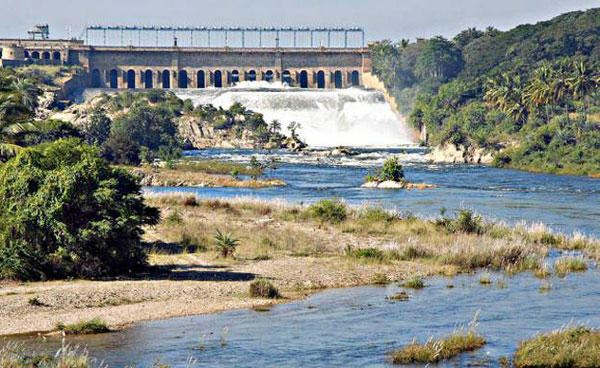
Experts have warned that drinking water may become a matter of concern in some parts of the state this summer. According to data from the Karnataka State Natural Disaster Monitoring Centre (KSNDMC), the total water storage in all 13 reservoirs stood at 535 thousand million cubic feet (TMCFT) in 2025, but has now dropped to 493 TMCFT, marking a difference of 42 TMCFT.
Last year, the Tungabhadra reservoir had around 40 TMCFT of water, which has now declined to 24 TMCFT. Similarly, the Linganamakki reservoir currently has 87 TMCFT, compared to 78 TMCFT last year.
The water level in the Supa reservoir has dropped from 82 TMCFT to 77 TMCFT. There has been a slight increase in the Krishnaraja Sagar reservoir, which stood at 37.88 TMCFT last year and has now risen to 38.64 TMCFT. The total capacity of the 13 reservoirs is 895.07 TMC, but at present, only 493.91 TMC is available, which is about 45 per cent of the total capacity.
Former KSNDMC director Srinivas Reddy stated that water could not be fully stored in the Tungabhadra reservoir last year due to damage to crest gates that led to water loss. He added that despite good rainfall in the catchment areas, the reservoir could store only about 70 per cent of the inflow. As drinking water needs are being prioritised, farmers are facing severe difficulties as water is not being supplied to agricultural lands.
Explaining the water loss, Reddy said that rising temperatures are causing increased evaporation. “Agriculture requires more water as crops demand higher water consumption,” he said.
Sources from the disaster management unit said that 43 taluks are already facing water scarcity due to excessive groundwater usage. In addition, some areas of Bengaluru that depend on borewells are also likely to face a crisis.
Officials have also stated that more than 500 villages across the state may face water quality issues due to severe depletion of groundwater. Experts have appealed to the public to use less water and avoid wasting this precious resource. As drinking water is the priority, they have advised that water should not be used for other purposes.