Daijiworld Media Network - Doha
Doha, Mar 20: Iran’s missile strikes on Ras Laffan Industrial City in Qatar on March 18 and 19, has caused significant disruption to global energy supply. Following the attack, Qatar’s liquefied natural gas (LNG) export capacity has reportedly declined by 17 per cent. This is expected to deal a major blow to countries like India that depend on gas imports from Qatar, raising serious concerns.
QatarEnergy has estimated a loss of around 20 billion US dollars in annual revenue due to the damage. It is said that repair works could take at least five years, potentially affecting long-term LNG supply and contracts.
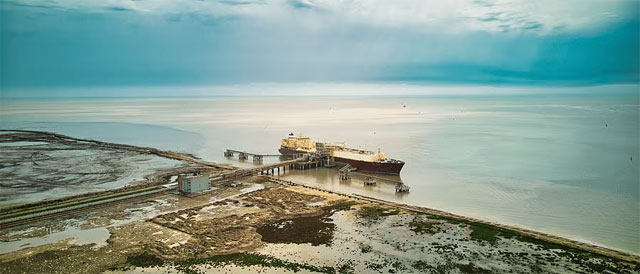
The crisis has raised concerns for India, which heavily depends on Qatar for its energy supply.
Data from the Petroleum Planning and Analysis Cell (PPAC) shows that Qatar accounts for nearly half of India’s LNG imports.
In 2024, India imported around 27.8 million metric tonnes of LNG, of which 11.30 million metric tonnes came from Qatar. This accounts for 47 per cent of the total LNG imports.
Statistics for 2025–26 from the PPAC and the Ministry of Commerce confirm that Qatar remains a leading supplier of gas to India.
The shortage in LNG supply could lead to reduced availability of gas in the domestic market, raising fears of a price hike.
The crisis in Qatar is likely to impact not only India but also countries such as China, South Korea, Italy, and Belgium.
The ongoing US-Israel joint military action against Iran has disrupted oil transit in the Middle East, leading to an energy crisis affecting several countries, including India.
There has also been disruption in LPG supply in India. The country depends heavily on West Asian nations for both LNG and LPG, and the situation may have an adverse impact on India’s economy.