Daijiworld Media Network - New Delhi
New Delhi, Mar 31: In a landmark moment for Konkani literature, acclaimed critic, author, and publisher H M Pernal was conferred with the prestigious Sahitya Akademi Award 2025 on Tuesday, March 31, during a grand ceremony held at the Kamani Auditorium here.
The award was presented by Madhav Kaushik, president of the Sahitya Akademi, in the presence of vice-president Prof Kumud Sharma and secretary Pallavi Holkar. Renowned Hindi author Vishwanath Tiwari served as the chief guest and delivered a compelling keynote address, while Aneish P Rajan, deputy secretary for the Ministry of Culture, was also in attendance.
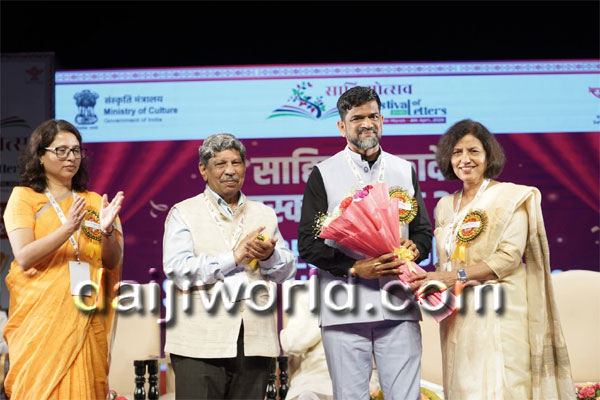
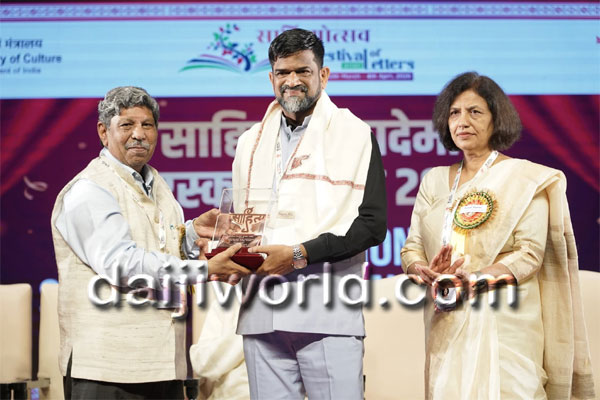
The ceremony celebrated excellence across 23 languages. H M Pernal received the honour for his seminal work of literary criticism titled ‘Konkani Kavyem: Rupam ani Rupakam’ (Konkani Poetry: Forms and Metaphors). This recognition is historically significant as it marks the first time in the history of the Sahitya Akademi that a book of criticism in the Konkani language has been bestowed with this prestigious national award. Published by Kavita Publications in both Devanagari and Kannada scripts, the book features a foreword by Jnanpith Award-winning author Damodar Mauzo.
This achievement brings the Sahitya Akademi honour back to the Karnataka region after a gap of eight years. H M Pernal now joins the esteemed ranks of previous laureates from the area such as Chafra D’Costa, Gokuldas Prabhu, Melvyn Rodrigues, and Edwin J F D'Souza. The award also highlights the rich literary tradition of the coastal belt, following in the footsteps of Mangalorean authors like J B Moraes and J B Sequeira, who received the award while residing in Mumbai.
H M Pernal is a prolific and influential figure in the contemporary literary circuit. In addition to his award-winning criticism, he has published widely acclaimed poetry collections including ‘Chalyank Chatray’, ‘Kaydyachyo Kavita’, and ‘Janel’. His versatility as a writer is further evidenced by his short story collections, ‘Devak Sodlo Pado’ and ‘Beeg ani Bigath’, which have earned him a reputation as a vital voice in modern Konkani literature.