Daijiworld Media Network - New Delhi
New Delhi, Apr 15: A new study suggests that artificial intelligence (AI) can help identify early risk patterns in individuals more likely to develop melanoma, offering potential support for future precision screening strategies.
The research, published on Wednesday, analysed nationwide registry data from Sweden covering the adult population. The dataset included demographic and health-related variables such as age, sex, medical diagnoses, medication usage, and socioeconomic status.
Out of more than 6 million individuals studied (6,036,186), around 38,582 people—approximately 0.64 per cent—developed melanoma over a five-year period.
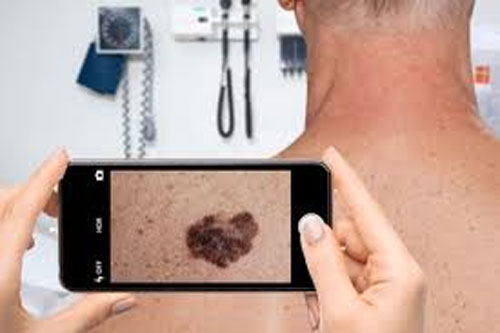
Researchers from the University of Gothenburg and its Sahlgrenska Academy found that AI models trained on this large-scale data were able to identify individuals at higher risk of developing melanoma with notable accuracy.
According to lead researcher Martin Gillstedt, the study demonstrates that routinely collected healthcare data can be used more effectively to flag high-risk individuals. He noted that while such tools are not yet part of standard clinical practice, they highlight strong potential for future use in preventive healthcare.
Another researcher, Sam Polesie, explained that combining diagnosis history, medication records, and demographic factors allowed the model to identify small high-risk groups, where the likelihood of developing melanoma within five years reached as high as 33 per cent.
The most advanced AI model in the study achieved about 73 per cent accuracy in distinguishing individuals who later developed melanoma from those who did not. This was significantly higher than simpler models based only on age and sex, which achieved around 64 per cent accuracy.
Researchers believe such approaches could eventually support more targeted screening programmes, improving early detection while making better use of healthcare resources. However, they emphasized that further research and policy development are needed before such systems can be integrated into routine medical care.