Daijiworld Media Network - New Delhi
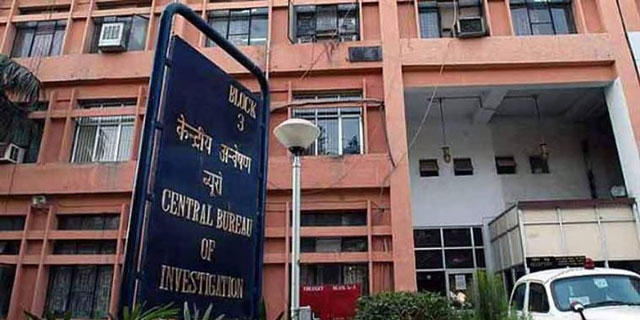
New Delhi, May 15: The Central Bureau of Investigation on Friday arrested Professor P V Kulkarni, alleged to be the mastermind behind the NEET-UG 2026 paper leak case, from his residence in Pune.
Kulkarni, a chemistry expert from Latur, was reportedly part of the panel involved in setting NEET question papers for several years and was associated with the examination process on behalf of the National Testing Agency.
According to the CBI, Kulkarni had privileged access to confidential NEET-UG 2026 examination material and allegedly misused that access to conduct special coaching sessions at his Pune residence, where questions and answers linked to the examination were shared in advance.
The agency alleged that during the last week of April 2026, Kulkarni mobilised students with the assistance of another accused, Manisha Waghmare, who had been arrested on May 14.
“Exploiting his privileged access to confidential material, Kulkarni conducted special coaching sessions for students at his residence in Pune, during which he dictated questions, answer options and correct answers linked to the examination,” the CBI said in a statement.
“He dictated the questions along with options and the correct answers during these special coaching classes, and the questions so dictated were handwritten by students in their notebooks and have exactly tallied with the actual question paper of NEET-UG 2026 Examination held on 03.05.2026,” the statement added.
Investigators said students allegedly paid several lakh rupees to attend these sessions, where the leaked question banks were dictated and discussed before the May 3 examination.
The agency said its teams had identified the actual source of the chemistry paper leak as well as middlemen involved in connecting students to the alleged racket.
“In the last 24 hours, CBI has also conducted searches at several locations across the country and seized several incriminating documents, electronic gadgets and mobile phones,” the agency’s spokesperson said.
Officials said forensic and technical analysis of the seized electronic devices was currently underway.
On Thursday, the CBI had arrested Dhananjay Lokhande from Ahilyanagar and his associate Manisha Waghmare from Pune.
According to investigators, Lokhande allegedly received the leaked paper from Waghmare and passed it on to Nashik-based Shubham Khairnar, who then forwarded it to Yash Yadav for further circulation.
The agency has also arrested Mangilal Biwal, Vikas Biwal and Dinesh Biwal from Jaipur, along with Yadav from Gurugram and Khairnar from Nashik.
Investigators alleged that Khairnar had informed Yadav in April that Mangilal Biwal was willing to pay Rs 10-12 lakh to procure leaked NEET questions for his younger son.
Officials said Khairnar allegedly shared around 500 to 600 questions with Yadav to ensure sufficient marks for admission to a reputed medical college.
According to the probe, Mangilal Biwal allegedly obtained the paper through Yadav, who was known to his elder son Vikas Biwal from a coaching institute in Rajasthan’s Sikar.
The deal for the leaked paper was allegedly finalised for Rs 10 lakh.
Investigators said Mangilal Biwal later shared the questions with his son and distributed them further among relatives.
The CBI also alleged that Yadav encouraged Vikas Biwal to identify additional NEET aspirants to whom the leaked questions could be sold in order to recover part of the money involved in the transaction.
Officials said analysis of seized digital devices had revealed incriminating chats, leaked question papers and other electronic evidence. The agency is also carrying out forensic examination to retrieve deleted data from the devices.
The CBI has registered an FIR and formed multiple teams to investigate the alleged leak, which eventually led to the cancellation of the NEET-UG 2026 examination conducted on May 3.
The examination was held across 551 cities in India and at 14 overseas centres, with nearly 23 lakh candidates registered for the test.
According to the NTA, information regarding alleged malpractice was received on the evening of May 7, four days after the examination, following which the matter was referred to central agencies for verification and further action.