Daijiworld Media Network – Makkah
Makkah, May 28: Millions of Muslims across the world began celebrating Eid al-Adha on Wednesday as pilgrims performing the annual Hajj in Saudi Arabia carried out the symbolic “stoning of the devil” ritual amid soaring temperatures exceeding 42 degrees Celsius.
Huge crowds of pilgrims gathered at the Jamarat complex in Mina, where they threw pebbles at towering pillars while chanting “Allahu Akbar” (God is Great). The ritual symbolises the rejection of evil and commemorates Prophet Ibrahim’s refusal to give in to Satan’s temptation when asked to submit to God’s command.
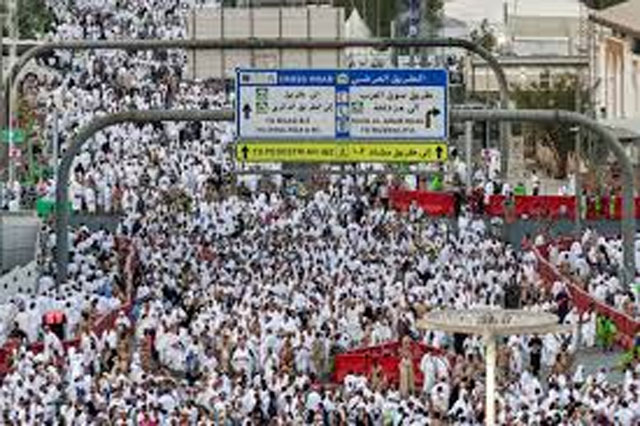
The physically demanding pilgrimage unfolded under intense desert heat, with many pilgrims carrying umbrellas and pouring water over their heads to stay cool. Saudi authorities urged pilgrims to remain hydrated and avoid prolonged exposure to direct sunlight.
Aamar Shakur, a pilgrim from Pakistan, described the ritual as a deeply personal spiritual experience.
“I am throwing stones at my own devil,” he said, referring to personal struggles and temptations.
Pilgrims arrived in Mina from Muzdalifah after spending Tuesday in prayer and worship at Mount Arafat, considered the spiritual peak of the Hajj pilgrimage.
The final days of Hajj coincide with Eid al-Adha, also known as the “Festival of Sacrifice,” which commemorates Prophet Ibrahim’s willingness to sacrifice his son in obedience to God’s command.
As part of the celebrations, Muslims traditionally offer prayers, sacrifice livestock such as sheep or cattle, and distribute meat among relatives and the poor.
Hajj, one of the five pillars of Islam, is mandatory once in a lifetime for every Muslim who is financially and physically capable. The pilgrimage draws Muslims from different countries, ethnicities and social backgrounds, symbolising unity and equality in faith.
Saudi authorities stated that more than 1.5 million pilgrims arrived from abroad this year to participate in the pilgrimage.
However, Eid celebrations remained subdued in several conflict-hit regions of the Middle East.
In Lebanon, families displaced by ongoing clashes between Israel and Hezbollah marked Eid in temporary shelters and schools converted into refugee camps.
“There is no Eid for us. We are displaced, forced to leave our homes and livelihoods,” said Rabee Khreis, who fled the conflict-hit village of Khiyam.
Similarly, Palestinians in Gaza observed Eid under the shadow of destruction and grief caused by the ongoing Israel-Hamas conflict.
In Khan Younis and Gaza City, worshippers offered Eid prayers amidst damaged buildings and devastated neighbourhoods.
“This is not Eid for us,” said displaced resident Mahmoud Saqer.
Ayda Al-Banna, who lost family members in the war, said, “Eid is only for the people who lost no one.”
According to Gaza’s Health Ministry, more than 72,800 Palestinians have been killed since the conflict began following the October 7, 2023 Hamas attack on Israel, which claimed around 1,200 lives and resulted in the abduction of several hostages.
Despite a fragile ceasefire currently in place, tensions and sporadic violence continue to impact daily life across the region.