Daijiworld Media Network - New Delhi
New Delhi, May 31: The ongoing conflict involving Iran has unexpectedly provided a major boost to India's plastic recycling industry, with demand for recycled polyethylene terephthalate (r-PET) rising sharply due to disruptions in the supply of raw materials used to manufacture virgin plastic.
Before the conflict, many companies continued to rely heavily on virgin PET for packaging despite government regulations mandating the use of at least 40 per cent recycled PET in procurement.
Industry experts say the conflict has disrupted the supply chain of key raw materials imported from countries such as the United Arab Emirates, Saudi Arabia, Qatar and Bahrain, all of which are important suppliers for virgin PET production.
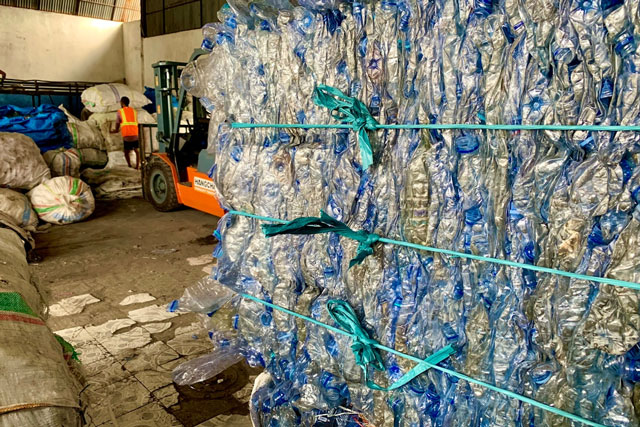
As a result, demand for recycled PET has witnessed a significant increase. Industry data indicate that monthly sourcing of r-PET has risen from around 5,000 tonnes before the conflict to nearly 15,000 tonnes currently.
According to Goutham Jain, Director General of the Association of PET Recyclers Bharat, continued disruption could further accelerate growth in the sector.
“If the war crisis persists, production capacity could reach 180,000 tonnes annually,” he said.
The conflict has also affected pricing. The cost of producing virgin PET has increased from around Rs 90 per kilogram to Rs 135 per kilogram, while the cost of manufacturing food-grade r-PET has risen from Rs 95 per kilogram to Rs 115 per kilogram.
The Food Safety and Standards Authority of India (FSSAI) has approved food-grade r-PET production capacity of approximately 300,000 tonnes, equivalent to about 40 per cent of the country's total PET consumption.
The approval follows regulations introduced by the Ministry of Environment, Forest and Climate Change requiring at least 40 per cent recycled PET content in food packaging materials.
Despite the mandate, industry estimates suggest that recycled PET currently accounts for only about 20 per cent of food packaging usage in India.
Experts argue that existing regulations continue to favour users of virgin plastic, as companies are allowed to defer recycling targets with limited or no immediate penalties.
However, the current supply-chain disruptions are expected to accelerate the transition towards recycled plastics, providing a significant opportunity for India's recycling industry while also supporting broader environmental and sustainability goals.